

There is an old Latin expression, “sine qua non,” which translates as, “without which there is not.” When it comes to health and nutrition, digestive enzymes may be the single most important “sine qua non.” Anyone who has any understanding of health knows that unless you are on a totally raw food diet you should take enzyme supplements with every single meal. If you are not regularly using digestive enzyme supplements, then take a moment to get a better understanding of this simple, inexpensive step that can dramatically improve your health and vitality.
In our previous report, Enzymes Defined, we explored the general nature of enzymes–what they are and what they do. In summary, enzymes are proteins that speed up chemical reactions. There are estimated to be 50-70 thousand different enzymes in your body that regulate every metabolic function needed to keep you alive. Without enzymes, all of these metabolic functions would progress through the same steps, but would go too slowly to sustain life. In essence, enzymes make life happen where otherwise there would be none. When it comes to digesting food, however, there are only a handful of enzymes that we need to worry about. Even so, choosing which ones to include in a supplement, and the ratios in which to include them, can be a daunting task for formulators…and for consumers when it comes to choosing which enzymes to buy.
Before we get into the details of what constitutes the ideal digestive enzyme formula, let’s take a look at why we need to use such a formula.
Digestion the Way Nature Intended
Again, as we described in Enzymes Defined, nature intended that you eat enzyme rich food (all live foods have enzymes present in them that promote their own breakdown) and chew it properly so that it thoroughly mixes with your saliva (which is also enzyme rich). If you do that, the food enters your stomach laced with the necessary enzymes. These enzymes then “predigest” your food for about an hour — actually breaking down as much as 75% of your meal.
In healthy digestion, it is only after this period of “predigestion” that hydrochloric acid is introduced to the process (along with the enzyme pepsin, which is secreted in the stomach). This acid/pepsin mix inactivates (but does not destroy) most of the enzymes used in predigestion and then begins its own function of breaking down any undigested protein content left in the meal, turning it into an amino-acid-rich concentrate. Note: stomach acid and pepsin only work on the digestion of proteins. They are not involved in the breakdown of fats and carbohydrates.
When this part of the process is finished, the concentrate moves on to the small intestine, where the acid is neutralized by the highly alkaline bicarbonate released from the pancreas, the inactivated enzymes are reactivated, and the pancreas introduces (along with the bicarbonate) whatever small amount of enzymes (proteases, lipase, and amylase) that are needed to finish the digestive process. As digestion is completed, nutrients are then passed through the intestinal wall and into the bloodstream.
The bottom line is that before any of the food you eat reaches your body’s cells, all the protein is broken down into amino acids, fats into fatty acids, and carbohydrates into glucose — or at least they should be. That’s what nature intended. Unfortunately, most of us don’t live our lives as nature intended!
Cooking and Processing Destroy Digestive Enzymes
 Man is the only animal (other than a handful of domesticated animals) that eats cooked and processed food! Unfortunately, it’s not only unnatural; it’s also decidedly unhealthy. Why? Because any sustained heat of approximately 118–129 degrees destroys virtually all enzymes, thereby disrupting the entire digestive process. In addition, most forms of food processing also destroy enzymes. When we refer to processed foods, we’re talking about anything made with white flour, white rice, pasteurized milk, processed cheese, chips, chemically preserved foods, soda pop, desserts, candy, TV dinners, etc. — all are devoid of enzymes.
The net result is that for most of us, the food we eat is severely enzyme deficient. Your body recognizes that the food you’re eating is devoid of enzymes and tries to compensate. For one thing, it releases more stomach acid than normal to compensate. Also, over time, it trains itself to pack your saliva with more amylase. Amylase levels in the saliva of people who eat a modern diet and don’t chew enough are as much as 40 times higher than in the saliva of people who eat a more natural diet — but it’s still not enough. The result is that instead of benefiting from predigestion as nature intended, the food you eat sits in your stomach for an hour, like a heavy lump, with little or no pre-digestion taking place.
But the problems don’t end with higher levels of amylase and stomach acid. The meal now enters the small intestine largely undigested. This forces the body to compensate yet one more time by forcing the pancreas to pump out huge quantities of enzymes to break down this largely undigested mush. Over time, this greatly stresses the pancreas, until it ultimately can no longer keep pace and starts producing fewer and fewer enzymes. This leads to tremendous inefficiencies in the extraction of energy and nutrients from your meals, is physically exhausting, and on top of everything else, the undigested food provides a vast breeding ground for all kinds of parasites and harmful bacteria as it moves through the intestinal tract and on into the colon. Is it any wonder that over 60 million people in the United States are affected with digestive disorders?1 “Digestive Diseases Statistics for the United States.” National Digestive Diseases Information Clearinghouse. 4 June 2014. (Accessed 21 July 2014.) http://digestive.niddk.nih.gov/statistics/statistics.aspx#all
Assuming you’re not eating a mostly raw, thoroughly chewed diet, regular supplementation with digestive enzymes minimizes the assault on your stomach, reduces the overproduction of hydrochloric acid, takes stress off the pancreas, maximizes the extraction of energy and nutrients, and prevents the draining of the body’s energy reserves — all by providing the enzymes required for digestion as nature intended. In other words, a well-designed digestive enzyme supplement just may be one of the best insurance policies you can give your body to enjoy a long and healthy life.
The Arguments Against Enzyme Supplements
Over the years, I have heard numerous arguments from medical doctors, mainstream nutritionists, and even some natural health practitioners as to why digestive enzyme supplements are either useless…or even harmful. In truth, these arguments are based on false assumptions and quickly dismissed. Let’s address the four main counterarguments.
1. Stomach acid destroys supplemental enzymes so they are a waste of money
As we’ve already discussed, in healthy digestion, stomach acid doesn’t enter the stomach until about an hour after eating. But really, let’s think for a moment. Do these same experts believe that your body would pack your saliva with amylase if it was going to be neutralized the moment you swallowed your food? Does anyone who has studied the body believe it knowingly wastes resources in this manner? Also, as we explored in detail in Enzymes Defined, for the most part, enzymes are not destroyed by stomach acid–merely inactivated until the pH of their environment is once again made more alkaline by the introduction of bicarbonate in the duodenum. And finally, some enzymes actually thrive in the high acid environment of the stomach–pepsin and acid stable protease, for example. And in supplements, you can use acid stable protease. The name says it all.
2. The claim that enough enzymes are in food in the first place is nonsense since if they were, they would digest the food before you ate it
Yes, this might be true if the enzymes were active while in the food in their normal state, but they are not. In truth, enzymes in food and seeds are dormant, waiting for the right time (determined by moisture, temperature, and exposure to day/night cycles) to activate. For example, the enzymes in seeds and nuts require the presence of moisture to activate. You can keep a seed or nut in your pantry for months or even years and nothing will happen. But soak those same seeds and nuts in water for 24-48 hours and sprouting takes place. During sprouting, the endosperm (the part we like to eat) uses enzymes to self-digest itself to feed the now growing embryo. How long can seeds wait before self-digesting? The oldest seeds on record to finally germinate and grow were date palm seeds found at the ancient Jewish fortress of Masada. They had been there for 2000 years before finally being discovered and subsequently germinated.2 “Masada date palm: the 2000 year old seed.” Ask Dr. Science. (Accessed 16 Jul 2014.) http://askdoctorscience.wordpress.com/123/ It also should be noted that many regulatory enzymes found in plants are strong proteases such as bromelain and papain. And although their role in plants is regulatory, not digestive, in the presence of protein based foods, they play a major role in breaking those foods down. Papain, for example, is used as a meat tenderizer.
And it’s not just plants. Meat too has enzymes in it that can cause it to self-digest and break down. This is why “aging” beef tenderizes it.3 F.C.Parrish, Jr. “Facts: Meat Science Aging of Beef.” Department of Animal Science, Iowa State University. (Accessed 21 July 2014.) http://www.goodcooking.com/steak/aging/aging.htm You don’t have to add anything to the meat. The natural enzymes already present in the meat activate during the aging process and commence the breakdown of the connective tissue in the muscle, which leads to more tender beef. These same enzymes don’t break down living tissue because, in living tissue, natural enzyme inhibitors hold them in check.
The fact that enzymes are present in raw food is not nonsense; the argument that they aren’t, however, is.
3. Your pancreas provides all the correct enzymes you need so taking supplements is a waste of money
 Yes, your pancreas absolutely does provide all the enzymes required for digestion, even if you eat cooked and processed food…that is, until it runs out of gas and can’t do so anymore. At a certain point, through overuse, you can no longer produce sufficient enzymes. Although we sometimes refer to this as an “enzyme reserve,” that’s not entirely accurate. It’s not like a woman’s supply of eggs–set from birth and finite so that you only have so many and when you run out, you run out. It’s more like having a workhorse on a farm. If you work him from sunup to sundown, feed him badly, and never give him a break, he’s going to die sooner rather than later. On the other hand, if you are kind to him, feed him well, and give him frequent rests, the odds are that he’s going to be able to be a working part of your farm for years. Likewise, the more stress you put on your body by eating an enzyme deficient diet, the sooner it’s going to give out and no longer produce sufficient enzymes. And it’s not just enzymes. Hypochlorhydria is a condition in which the stomach no longer produces sufficient hydrochloric acid; hypochlorhydria is commonly associated with aging. From approximately age 35 on, most people begin to secrete less stomach acid. And many nutritionally-oriented doctors estimate that over 50% of their patients have reached a state of hypochlorhydria by the time they reach their 50’s, and an astonishing one third of individuals may actually suffer from achlorhydria–a complete absence of stomach acid–by the time they are 60.4 El-Hashemy Shehab, Skowron Jared, Sorenson Linda (2011) Textbook of Naturopathic Family Medicine & Integrative Primary Care: Standards & Guidelines CCNM Press.
Make no mistake, taking supplemental enzymes with every meal not only improves the digestion of that particular meal, it also extends your body’s ability to produce both the necessary enzymes and stomach acid as you age.
4. The pancreas is like a muscle and needs to be exercised
And then there are those who argue that the pancreas is like a muscle and needs to be exercised by constantly being forced to make enzymes or it loses the ability over time. We’ve already covered this, but to extend the “muscle building” analogy: any good bodybuilder knows that you have to rest a muscle after exercising it if you want it to build up. If you don’t rest the muscle, it actually breaks down and gets weaker over time. The same holds true for your pancreas’ ability to produce enzymes and your stomach’s ability to produce acid. If you are always pushing it to the limit with every meal, your body’s capacity to produce both will degrade sooner rather than later.
A Supplement Designed for Real World Diets
Now let’s take a look at what an ideal dietary enzyme supplement looks like.
Many people think that designing a digestive enzyme formula is as simple as racking up big numbers in the key enzymes such as protease, amylase, and lipase. Some companies go so far as to present tables in their literature comparing their protease levels in their formula to the levels found in competitors’ formulas, with the implied understanding that he who has the most wins. If only it were that simple. The fact is that a good digestive enzyme needs to work with real world diets. The simple truth is that too many formulas on the market put in far more protease than is required for a typical diet (simply to show a big number on the label) — and far too little amylase or lactase–not to mention almost none of the specialized carbohydrate enzymes. (Remember, you can only fit so much in a capsule. If you add more of one ingredient, you have to use less of something else.) In the end, it’s not about the numbers, it’s about the ability of the supplement to work with real world diets. Keep in mind, I’m not talking about providing an excuse for eating badly, even though a good digestive enzyme formula will certainly help those who do eat badly. What I’m talking about is a formula that helps people who try and do the right thing but still need help because they live in the real world. They still have to eat on the road more often than they might like. They still eat more cooked and prepared foods than is ideal. In other words, they eat “real world” diets.
“These Digestive Enzymes really help. Before, I used to get indigestion all the time, but now I have no problems at all. I can’t get along without [them].” James T., FL.
There are several hundred digestive enzyme formulas on the market. Unfortunately, the vast majority of them aren’t worth the cost of the bottles they’re packaged in. I want to give you the tools to separate fact from fiction when it comes to those formulas. These tools center on your ability to identify:
- Watered down formulas
- Actual enzyme activity
- Why the “my protease is bigger than your protease” game is useless
- The importance of pH ranges in a formula and why enteric coating is counterproductive
- Breaking down fats
- Breaking down carbohydrates — a task for specialists
- Animal sourced enzymes VS vegetarian sourced enzymes
- Whether or not your formula is designed for the real world
- The importance of HCL — and where it belongs
Watered Down Formulas
 All too often, nutritional formulas are designed by people who get their “expertise” from books, not real world experience. This makes for formulas that may look good on paper, but make no sense in the real world. Examples include formulas that contain 30 ingredients stuffed into a 500 mg capsule. On paper, it gives companies bragging rights to all of these great ingredients in their formula, which some people think is a good thing. But the reality is that if all the ingredients are equal in the formula, that means just 16.7 thousandths of a gram of each ingredient is present. In fact, the reality is usually worse, with the first few ingredients getting more and the rest getting as little as 4, or even 2, thousandths of a gram. Incidentally, a full gram is only 1/28 of an ounce. When you get down to 16.7 thousandths of a gram or less, you’re talking pixie dust levels for a given ingredient. In fact, the ink identifying the ingredient on the label may weigh more than the ingredient in the capsule itself.
So what does this have to do with enzymes? Well, it’s hard enough to stuff all of the enzyme activity you need into a 500 mg capsule, even packing capsules full to the brim with the highest quality enzymes. And yet, so many enzyme formulas, stuff their enzyme capsules with more herbs than enzymes because it looks good on the label. For example, I went on the net and randomly pulled up a major selling enzyme formula. It has only a little over 100 mg of enzymes in each capsule. That’s just one-fifth of the capsule by weight. What it does have is over 300 mg of herbs (nothing wrong with them except for the fact they have nothing to do with the purpose of the formula) and 100 mg of fillers. That means that with this formula, it will take you 5 capsules to get the enzyme activity you would get from just one properly designed capsule.
Incidentally, this is the same formula that the Whole Foods nutrition expert recommended to me when I recently went browsing in one of their stores. When I asked them why they thought this was the best digestive enzyme formula, they answered, “Well, it has more stuff in it than any of the other formulas we carry.”
Deep sigh!
Actual enzyme activity
Once again, we explored this in detail in Enzymes Defined: many formulas only list the mg of each enzyme in the formula–not their activity levels. Unfortunately, two batches of the same enzyme of equal weight can have wildly different activity levels. The internationally recognized and accepted standard for the measurement of enzyme activity levels is by Food Chemical Codex (FCC) Units. This is usually expressed in different activity units for each type of enzyme. (We’ll return to this topic in a bit.)
The important point is that when buying a digestive enzyme formula, you need to look at activity levels, not mg’s.
Why the “my protease is bigger than your protease” game is useless
Now let’s talk about protease. Is it important? Absolutely! But even when limiting our discussion to just protease, things are a bit more subtle than how large our numbers are. It’s not just a question of “how much” protease you have, but also “how effective” that protease is in the different pH environments the formula will encounter as it moves through the digestive tract. Remember, the stomach starts out as pH neutral then shifts to highly acidic an hour after eating, and then as the food leaves your stomach and enters the intestinal tract, it encounters an alkaline environment. The problem is that proteins need to be broken down in all three environments, but no single protease works optimally in all these environments. There is only one answer. You have to use more than one source of protease, and one of them has to be acid stable. This is a fairly simple concept, but it is amazing how many companies ignore it in their formulas. Make sure you don’t when purchasing your formula.
The importance of pH ranges in designing a digestive enzyme formula and what about enteric coating
Let’s now elaborate on two important reasons that we’ve already alluded to for making sure that your enzyme supplement begins working in the stomach. They are concerned with signaling. The amount of enzyme predigestion that takes place in your stomach is a key factor (along with the volume of food in your meal and the current pH level in your stomach) to two crucial signals sent to your body.
 First, the less predigestion that takes place, the more stomach acid your body will produce to compensate for the lack of predigestion. The more predigestion that takes place, the lower the requirement for stomach acid. This has profound implications for both acid reflux disease and for the ability of your body to produce sufficient stomach acid as you age. Overproduce in the short term and you’ll burn out your ability to produce in the long term.
- Second, the less predigestion that takes place in the early stages of digestion, and the more stomach acid released in your stomach as a result, the greater the amount of bicarbonate and pancreatic enzymes that your pancreas will be forced to produce to compensate. The net result is that the greater the workload on your pancreas in the near term, the less it will be able to produce as you age.
Some formulators actually enteric coat their enzyme tablets, ostensibly to protect them from stomach acid. But this is counterproductive — the result of book learned theory, not real world experience. If the enzymes are enteric coated, they won’t begin working until they reach the intestinal tract. Yes, an argument can be made that this makes sense for some systemic, proteolytic enzyme formulas–especially if they contain serrapeptase–but not digestive enzymes. The primary role of digestive enzymes is to work in predigestion. If they are enteric coated, that can’t happen. While it’s true that they will help digest the food once it reaches your intestinal tract, without working in the stomach, they will have no influence on the signaling mechanisms that slow down the release of excess stomach acid or the overproduction of bicarbonate and enzymes by the pancreas. As we discussed earlier, that’s a crucial benefit you’re looking for from your digestive enzyme supplements. Enteric coated enzyme tablets, by definition, do not provide it.
Breaking down fats
Lipase is actually the simplest of the enzymes to deal with. It’s fairly acid stable, and it works on pretty much all fats — aided later in the digestive process by bile produced in the liver. As long as you have enough lipase in your formula, you’re pretty well covered, although some people may need to add bile salts to their supplementation program if their livers are not producing adequately, or their gallbladders are blocked. Bile salts are usually sold in the form of ox bile supplements.
Breaking down carbohydrates — a task for specialists
This is where we separate the men from the boys when it comes to digestive enzyme formulas. This is where a formula designed for “real world diets” moves ahead of formulas designed from textbooks. The simple truth is that there is no one “carbohydrate enzyme” that breaks down all carbs. Thinking that just including lots of amylase in your formula will break down all the carbohydrates and starches in your diet is going to leave you disappointed.
You need specialized enzymes such as:
 Lactase to digest milk sugar. Lactase deficiency is the most common and well-known form of carbohydrate intolerance. Most mammals, including humans, have high intestinal lactase activity at birth. But, in most people, this activity declines to low levels during childhood and remains low in adulthood. The low lactase levels cause incomplete digestion of milk and other foods containing lactose. Symptoms include mildly increased levels of gas and bloating. It is estimated that approximately 70% of the world’s population falls in this category and is somewhat deficient in intestinal lactase. Most people in this category simply ignore the symptoms thinking they’re just a normal part of life. On the other hand, it is also estimated that as many as one-third of the U.S. population are presumed to be so deficient that they qualify as lactose intolerant and are simply unable to digest dairy products without major problems.5 “What is the prevalence of Lactose Intolerance worldwide?” Venter Pharma. (21 Jul 2014.) http://www.venterpharma.com/en/intolerance_worldwide.html (In Japan, that number is estimated to be anywhere from fifty to ninety-percent.) For these people, the symptoms are so severe, they cannot be ignored. Supplemental lactase enzymes have been found to decrease the symptoms of lactose intolerance associated with the consumption of dairy foods. Note: even if you don’t eat dairy products at home, they are added to many foods that you will eat in restaurants.
- Amylase helps your body break down and assimilate starches and carbohydrates. Carbohydrates that we eat mainly come in the form complex sugars and starches. Amylases hydrolyze (break apart) these long chain carbohydrates at the interior alpha-1, 4-glucosidic bonds, separating them into disaccharides and trisaccharides which, are then converted by other enzymes to glucose to supply the body with energy.6 Singh S, Guruprasad L. “Structure and sequence based analysis of alpha-amylase evolution.” Protein Pept Lett. 2014;21(9):948-56. http://www.ncbi.nlm.nih.gov/pubmed/25034346 Supplemental amylase is particularly useful for those who don’t chew enough. How much should you chew? The standard recommendation in the natural health community is that you need to chew each mouthful of food between 25 and 50 times. (The number will vary with each person.) And when it comes to juices and smoothies, the number remains the same, but instead of chewing, we’re talking about swishing the liquid around in your mouth 25-50 times so that it gets thoroughly mixed with saliva. If you’re not chewing that much, then you need a digestive enzyme supplement with amylase.
- Glucoamylase assures the breakdown of maltose (malt sugar) into glucose molecules. The action of glucoamylase completes what amylase starts; it ends in the release of glucose. Glucoamylase works hand-in-hand with amylase by breaking down terminal linkages, whereas amylase breaks interior bonds. Specifically, glucoamylase hydrolyzes terminal 1,4-linked alpha-D-glucose residues successively from non-reducing ends of amylose chains left behind by the action of amylase to release free glucose.7 Kelly, J.J. and Alpers, D.H. (1973). “Properties of human intestinal glucoamylase”. Biochim. Biophys. Acta 315: 113–122. http://www.ncbi.nlm.nih.gov/pubmed/4743896 A digestive enzyme formula with amylase but without glucoamylase is like Laurel without Hardy. It simply doesn’t do the job.
- Cellulase breaks down cellulose (fiber), which allows us to access key nutrients. Cellulase, which is not produced by the human body, breaks the bonds found in fiber. By disrupting the structure of the fiber matrices or cell walls which envelop most of the nutrients in plants, cellulase increases the nutritional value of fruits and vegetables. In other words, you want cellulase in your formula not to digest and absorb cellulose, but to facilitate its breakdown so that you can access the nutrients locked within the fiber. Many beneficial micronutrients — carotenoids in carots, polyphenols in berries, enzymes, and folate in beans, spinach, and broccoli, for example–are bound to the fiber of the plant they’re found in.8 Parada J, Aguilera JM: “Food microstructure affects the bioavailability of several nutrients.” J Food Sci 2007, 72:R21-32. http://www.ncbi.nlm.nih.gov/pubmed/17995848
- Hemicellulase completes the job that cellulase starts by breaking the interior glucosidic bonds of galactomannoglucans yielding polysaccharides of lower molecular weight. Hemicellulase breaks down hemicellulose. Bottom line: hemicellulase helps break down fiber components in the intestinal tract–again releasing the carotenoids, polyphenols and other phytochemicals bound to the fiber..
- Malt diastase, aka maltase, digests complex and simple sugars. Maltase also breaks down unused glycogen in muscle tissue. Glycogen is a thick, sticky substance that is converted from sugars and starches and is stored in your muscle cells for future use. If stored glycogen continues to build up in the muscle tissues, it leads to progressive muscle weakness and degeneration–a disease known as acid maltase deficiency myopathy.9 Michael Weinik, Denise I Campagnolo. “Acid Maltase Deficiency Myopathy.” Medscape 25 Mar 2014. (Accessed 21 Jul 2014.) http://emedicine.medscape.com/article/313724-overview
- Invertase works to break down sucrose products like refined table sugar. The abundance of processed and highly refined foods in the average diet means we consume a great amount of this type of sugar which can contribute to digestive stress. It has been theorized that sucrose intolerance may be a contributing factor in many allergies.10 Phil Lieberman. “Is allergy or intolerance to sweet or sugar exist, and how to manage or treat it?” AAAA. (Accessed 21 Jul 2014.) http://www.aaaai.org/ask-the-expert/allergy-intolerance-sugar.aspx Supplemental invertase enzymes can increase the assimilation and utilization of this sugar, while at the same time minimizing any possible allergic responses.
- Alpha Galactosidase helps minimize gas, bloating, and flatulence caused by carbohydrates found in certain foods such as beans that are not readily digestible in the small intestine. Undigested, these carbohydrates then pass into the large intestine where they are fermented by bacteria and produce gas, bloating, pain, and general discomfort. The use of supplemental alpha galactosidase minimizes this problem.
- Supplemental pectinase actually helps with the digestion of proteins. Research indicates that the pectin found in fruits may coat proteins eaten in the same meal, thereby inhibiting their complete digestion. Pectinase breaks down the pectin coating the proteins, thus allowing for the complete digestion of proteins – and thus reducing the possibility of food allergies.
Animal sourced enzymes VS vegetarian sourced enzymes
Make sure that the enzymes used in your formula are vegetarian sourced. Vegetarian enzymes (primarily fungal based), are more acid stable than animal sourced enzymes and work in a wider range of pH environments. In addition:
- Their activity levels are more consistent
- They are less likely to be contaminated with pesticides and xenoestrogens
- They are less likely to contain prions — a concern relative to mad cow disease and its human manifestation: Creutzfeldt-Jakob disease.11 The Official Mad Cow Disease Home Page. http://mad-cow.org/
HCL
Some enzyme formulas like to include HCL (stomach acid) in the form of betaine hydrochloride to aid in digestion. But for the reasons that we’ve already talked about, this does not make sense. Taking betaine HCL along with your enzyme supplement (or as part of it) creates an acid environment too soon in the digestive process. The bottom line is that for those who need supplemental HCL (a significant percentage of the elderly as we’ve already discussed), it should be taken as a separate supplement 40-60 minutes after you finish eating.
The Actual Digestive Enzyme Formula
As I’ve stated previously, when comparing enzymes, if you want an apples to apples comparison, you need to compare activity levels, not milligrams. The internationally recognized and accepted standard for measurement is by Food Chemicals Codex (FCC) Units. These are usually expressed in different activity units for each type of enzyme. For a formula based on the above criteria, that would be:
 Protease — 40,000 HUT (Hemoglobin Units, Tyrosine basis).
- Acid Stable Protease — 1,500 SAPU (Spectrophotometric Acid Protease Units).
- Lipase — 1,400 FIP. Formerly measured in LU (Lipase Units), but now more commonly measured in FIP units (i.e., according to the test methods of the Fédération Internationale Pharmaceutique). On a unit to unit basis, 1 FIP is equivalent to 10 LU.
- Amylase — 16,000 SKB (named after the creators of the test: Sandstedt, Kneen, and Blish ) or DU (used in the brewing industry). SKB and DU match up one to one.
- Malt Diastase — 600 DP (Diastatic Power)
- Invertase — 200 SU (Summer Units). Sometimes labeled IAU (Invertase Activity Units). 1 IU is equivalent to 500 SU.
- Alpha Galactosidase — 150 GALU (Galactosidase Units)
- Glucoamylase — 30 AG (Amyloglucosidase Units)
- Lactase — 2,500 LACU (Lactase Units)
- Cellulase — 750 CU (Cellulase Units)
- Hemicellulase — 200 HCU (Hemicellulase Units)
- Pectinase — 100 AJDU (Apple Juice Depectinizing Units)
It is these kinds of ingredients at these kinds of levels that actually work on the complete range of foods you are likely to eat — whether it’s a gulped down sprout salad at home, or a pepperoni pizza on the road. It is these enzymes that define a formula as designed for “real world” diets.
Real World Benefits
As Dr. Howell said in his book on enzyme nutrition, “A person’s life span is directly related to the exhaustion of their enzyme potential. And the use of food enzymes decreases that rate of exhaustion, and thus, results in a longer, healthier, and more vital life.“12 Edward Howell, Enzyme Nutrition: The Food Enzyme Concept (New Jersey: Avery Publishing Group, 1985. But what does this mean in real life?
“I’ve always had upset stomach problems and bloating. And then someone introduced me to the Digestive Enzymes, and I couldn’t believe how they calmed my stomach down. That was years ago, and I’ve been taking them ever since. They have been life saver for me. I don’t leave home without them!” Juan A., CA
In addition to a longer, healthier, and more vital life, you may also experience a number of short-term benefits including:
- A significant reduction in indigestion and heartburn problems resulting from too much acid in the stomach.
- Relief from gas and bloating as a result of improved carbohydrate digestion. (Some people may actually notice an increase in activity for several days as their digestive systems come alive. Then as the body adjusts, things back down.)
- Improved digestion of dairy products caused by lactose intolerance.
- Diminished food allergies due to more complete protein digestion.
- An increase in energy levels as the result of greatly reduced stress on the body.
Regular use of these types of enzymes may also provide relief from acid reflux and some of the symptoms associated with hiatal hernias. Acid reflux occurs when high levels of stomach acid are introduced too early in the digestive process and back up into your esophagus. It is also a symptom associated with hiatal hernias. Oftentimes, the mere act of using them can, over time, eliminate the actual cause of the acid reflux, not simply force the body to shut off production of stomach acid. With all the colorful pills and catchy promises being peddled by pharmaceutical companies, it is important for you to understand that while the use of prescription and over-the-counter acid reflux drugs may indeed help alleviate the symptoms of acid reflux, they may also significantly aggravate the following three problems:
- Incomplete digestion. Too much stomach acid is certainly a problem, but so is too little. Stomach acid is essential to unwind proteins so pepsin can work on breaking them apart. Without sufficient stomach acid, proteins are only partially digested, which means that many insufficiently broken down proteins enter the bloodstream causing allergic and autoimmune problems. Enzymes present for predigestion can help mitigate some of the problem by breaking down some of the proteins without the need for normal levels of stomach acid. But that said, the problem of incomplete protein digestion is only compounded when you use acid reflux medication since you end up with insufficient stomach acid…or virtually none in many cases.
- Accelerated pancreatic burnout. The less protein that is broken down in the stomach as a result of insufficient stomach acid, the more pancreatic enzymes your pancreas must produce to make up the difference. If your diet is also enzyme deficient, this doubles the stress on your pancreas.
- Malnutrition. Incomplete digestion means that you don’t get full nutrient value from your meal. This is a common condition in the elderly, again, aggravated by the use of acid reflux medications. Both iron and vitamin C, for example, require stomach acid for proper absorption. As a result, deficiencies of both nutrients have been noted as side effects from the use of acid reflux medication.13 Denis M. McCarthy. “Adverse Effects of Proton Pump Inhibitor Drugs: Clues and Conclusions.” Curr Opin Gastroenterol. 2010;26(6):624-631. http://www.ncbi.nlm.nih.gov/pubmed/20802330
And finally, regular use of enzymes to aid digestion may provide relief from ulcers in two ways.
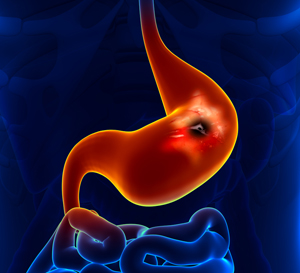 First, they help digest so much of your meal during the 40-60 minutes of predigestion that your body requires less acid in the actual digestion phase. This means that taking them helps lower the levels of acid in your stomach. (Those who already suffer from chronic low levels of acid need not worry. Digestive enzyme supplements help here too by breaking down so much food in predigestion that less acid is actually required to digest your meal. And over time, decreased demand results in increased reserve capability.)
- Second, protease will begin breaking down the protective coating of the H. Pylori bacteria responsible for so many ulcers. In other words, it will actually begin to digest it. This is the prime reason digestive enzyme supplements are so helpful for those who have ulcers.A cautionary note. There is one concern when using digestive enzymes with ulcers — and that’s if you have a severe existing ulcer. What happens is that the protease can actually begin to digest severely damaged stomach tissue since it’s no longer protected by the mucosal lining. This can cause noticeable discomfort for several days. To avoid this discomfort, if you have a severe ulcer, start with very small amounts of the digestive enzyme supplement with your meals and build up slowly.
The good news for the average person in the real world is that supplementing with a good digestive enzyme formula goes a long way to improving how your body works and feels.
Conclusion
We should now understand what Dr. Howell meant when he said that a person’s life span is directly related to the exhaustion of their enzyme potential, and that the use of food enzymes decreases that rate of exhaustion, and thus, results in a longer, healthier, and more vital life.
At a minimum, you should now understand why it’s important to use a good digestive enzyme supplement with each and every meal you eat — particularly any meal that contains either processed or cooked food.
How many enzymes should you take? Well, that depends on the strength of your formula and the size of your meal. If one capsule works for most of your meals, you may find you need to take two when you overindulge, or even four with your Thanksgiving feast.
And when do you take your enzymes?
The simple answer is to take them just before you start eating so that they start releasing even as the first mouthfuls of food are entering your stomach. This sends a signal to your body that enzymes are present and begins to train your body to hold back on the stomach acid for the 40-60 minutes as nature intended and to cut back on the amount of pancreatin it needs to produce.
If you forget to take your enzymes before you start eating, they can still be of some use after you eat — depending on the size of the meal and how heavy it is and if your formula contains acid stable protease. In fact, you may find that you can still get a notable benefit, although no signaling benefit, taking an enzyme supplement 3-4 hours after eating a large, heavy meal — you know, the kind that feels like it sits in the stomach like a giant piece of lead for hours!
And finally, keep liquids with your meals to a minimum. Liquids with your meals dilute all aspects of digestion– enzymes in your saliva, enzymes in digestion, stomach acid, and pepsin released in the stomach. And it exhausts your body, forcing it to compensate by packing more amylase in your saliva, releasing ever greater amounts of stomach acid and pepsin, and stressing your pancreas to release larger and larger amounts of pancreatin to pick up the slack. Other than a few sips of liquid while eating, drink your liquids between meals, not during.
Dual action formulas
It is possible to use digestive enzymes as systemic, proteolytic enzymes (enzymes designed to clean out the bloodstream and body and which are taken without food so they go into the bloodstream). In fact, for years I designed enzyme formulas in this way–to provide dual function. It’s convenient, and it does work. The problem is that you have to compromise your formula to do this. A capsule can only hold so much. If you beef up the protease to accommodate the proteolytic functions, you have to back off from the other digestive enzymes. But if you make the formula a full spectrum digestive enzyme formula, you have to cut back on the proteases and anti-inflammatory supporting ingredients, or at least the ability of the proteases to work in a wide range of pH’s. The bottom line answer is that yes you can use a good digestive formula for both purposes. This is certainly an option if you are allergic to ingredients like bromelain or papain. But barring that situation, you’re better off using digestive enzymes supplement with your meals and a pure proteolytic formula between meals.
An Experiment
There is a fun experiment you can perform (that will work with any good digestive enzyme formula) and that will actually let you see the benefit of enzyme supplementation in just a few minutes.
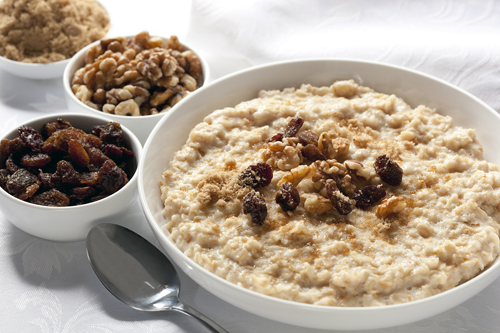
- Make a bowl of instant oatmeal.
- Let it cool until it has begun to set and is only slightly warm to the touch. (If it’s too hot, it will destroy the enzymes.)
- Mix a couple of digestive enzyme capsules into just one of the bowls of oatmeal.
- Keep mixing. Note: this mimics the action of the stomach which is continually squeezing, mixing, churning, and grinding the food that you eat.
In 30-60 seconds, if the formula you are using is any good, there should be a pronounced difference in the oatmeal. Whereas it was previously congealed, lumpy, and had a stick to your ribs consistency. It will, now that the enzymes have begun to work, look quite different. It will have the consistency of watery gruel. Which version of the oatmeal would you rather have work its way through your body: the one that’s stuck to the bowl like cement, or the watery gruel that’s undergone predigestion? Which oatmeal do you think is less stressful to digest?
This is a fun demonstration, and video versions of it are posted all over the internet. Most of the people who talk about it on these demos have no idea what’s actually going on and misrepresent the facts. They claim that it is proof that their enzymes are better than anyone else’s and that it shows how quickly enzymes can digest your meal. It actually shows neither of those things.
Virtually any reasonable digestive enzyme formula, and even some that are not that reasonable to tell the truth, will do the trick. All it takes is having some amylase in your formula, which most do. Technically, what’s happening is that oatmeal consists of some 90% (1,3/1,4) beta glucan, a soluble fiber. When the oats encounter hot water, these beta-glucans begin to absorb water and swell. They form a loose three-dimensional network, trapping water into a soft gel, thus giving the oatmeal its congealed appearance. As we discussed earlier, amylase breaks carbohydrates at their interior 1,4 bond. And that’s what happens when you add enzymes to oatmeal: they break up the three-dimensional network that holds your oatmeal together–returning it to a watery consistency. The test does not show that the enzyme you are using can break down protein (that takes longer), or even other complex carbohydrates for that matter. But most importantly, it doesn’t show whether or not the enzymes can then break down the disaccharides and trisaccharides produced by the amylase into glucose, which is what your body can actually use. You need glucoamylase in your formula to do that.
Does that make the test meaningless? Not at all. It actually demonstrates several important things.
- Enzymes really do something. They are not a placebo.
- They work quickly. In seconds, they break down the simple carbs. Give them a full 40-60 minutes as they would have in the stomach, and 70% of that oatmeal truly would be digested.
- And finally, the visual difference in the two versions of the oatmeal truly does give you a sense of how much less stressful it is to your body to digest a meal that has been eaten along with digestive enzymes versus one that has not.
These are significant observations and point to significant benefits.
Incidentally, this experiment directly relates to a comment below where someone asked: if amylase speeds up the digestion of carbohydrates, does that mean it also speeds up the rate at which sugar enters the blood—thus putting you at greater risk of diabetes? That turns out to be a good point, but the wrong question. The right question is: do higher levels of amylase increase the glycemic response, thus making your body’s response to starches more unhealthy? And the answer is: no, they do the exact opposite. Studies show that higher levels of amylase activity are actually associated with improved glycemic homeostasis following starch ingestion in adults.14 Abigail L. Mandel and Paul A. S. Breslin. “High Endogenous Salivary Amylase Activity Is Associated with Improved Glycemic Homeostasis following Starch Ingestion in Adults.” J Nutr. May 2012; 142(5): 853–858. http://www.ncbi.nlm.nih.gov/pmc/articles/PMC3327743/ So be assured that taking supplemental enzymes with amylase is beneficial and actually lowers your diabetes risk.
Note:
A new digestive enzyme has recently been made commercially available. It’s called dipeptidyl peptidase, or DPP-IV for short. Theoretically, it has the ability to modestly assist in breaking down three problematic proteins: casein, gluten, and gliadin.15 Ehren J1, Morón B, Martin E, Bethune MT, Gray GM, Khosla C. “A food-grade enzyme preparation with modest gluten detoxification properties.” PLoS One. 2009 Jul 21;4(7):e6313. http://www.ncbi.nlm.nih.gov/pmc/articles/PMC2708912/ What’s not to love? I have been researching it for some time and have confronted four problems.
- There are really no convincing studies that prove it actually works in the human digestive system when taken as a supplement; or if it works, how well it works.
- Without human studies, no one really knows how much is needed–again assuming it works at all. It’s pretty much guess work at the moment.
- DPP-IV activity comes as part of an overall peptidase enzyme, and it’s not very concentrated. You need to use a lot of the generic peptidase enzyme to get an adequate amount of DPP-IV activity. This means it’s difficult to use as ingredient in an overall digestive enzyme supplement. You almost have to use it as the primary component in a gluten specific formula.
- And finally, to make matters even worse, there is no agreed upon standard for determining activity levels for the enzyme, which makes resolving the first two issues that much more difficult.
None of these problems is insurmountable. In fact, these kinds of issues are quite common with new ingredients. Some companies have even started including it in gluten specific formulas even though questions about its efficacy remain unanswered. I’m not willing to do that. I will continue researching DPP-IV, and if I conclude that its addition can actually improve the formula we outlined above, I will not hesitate to add it–or possibly use it as the central enzyme in a gluten specific formula.
(Originally published 04/01/1999. Updated 08/04/2014.)
References
| ↑1 | “Digestive Diseases Statistics for the United States.” National Digestive Diseases Information Clearinghouse. 4 June 2014. (Accessed 21 July 2014.) http://digestive.niddk.nih.gov/statistics/statistics.aspx#all |
|---|---|
| ↑2 | “Masada date palm: the 2000 year old seed.” Ask Dr. Science. (Accessed 16 Jul 2014.) http://askdoctorscience.wordpress.com/123/ |
| ↑3 | F.C.Parrish, Jr. “Facts: Meat Science Aging of Beef.” Department of Animal Science, Iowa State University. (Accessed 21 July 2014.) http://www.goodcooking.com/steak/aging/aging.htm |
| ↑4 | El-Hashemy Shehab, Skowron Jared, Sorenson Linda (2011) Textbook of Naturopathic Family Medicine & Integrative Primary Care: Standards & Guidelines CCNM Press. |
| ↑5 | “What is the prevalence of Lactose Intolerance worldwide?” Venter Pharma. (21 Jul 2014.) http://www.venterpharma.com/en/intolerance_worldwide.html |
| ↑6 | Singh S, Guruprasad L. “Structure and sequence based analysis of alpha-amylase evolution.” Protein Pept Lett. 2014;21(9):948-56. http://www.ncbi.nlm.nih.gov/pubmed/25034346 |
| ↑7 | Kelly, J.J. and Alpers, D.H. (1973). “Properties of human intestinal glucoamylase”. Biochim. Biophys. Acta 315: 113–122. http://www.ncbi.nlm.nih.gov/pubmed/4743896 |
| ↑8 | Parada J, Aguilera JM: “Food microstructure affects the bioavailability of several nutrients.” J Food Sci 2007, 72:R21-32. http://www.ncbi.nlm.nih.gov/pubmed/17995848 |
| ↑9 | Michael Weinik, Denise I Campagnolo. “Acid Maltase Deficiency Myopathy.” Medscape 25 Mar 2014. (Accessed 21 Jul 2014.) http://emedicine.medscape.com/article/313724-overview |
| ↑10 | Phil Lieberman. “Is allergy or intolerance to sweet or sugar exist, and how to manage or treat it?” AAAA. (Accessed 21 Jul 2014.) http://www.aaaai.org/ask-the-expert/allergy-intolerance-sugar.aspx |
| ↑11 | The Official Mad Cow Disease Home Page. http://mad-cow.org/ |
| ↑12 | Edward Howell, Enzyme Nutrition: The Food Enzyme Concept (New Jersey: Avery Publishing Group, 1985. |
| ↑13 | Denis M. McCarthy. “Adverse Effects of Proton Pump Inhibitor Drugs: Clues and Conclusions.” Curr Opin Gastroenterol. 2010;26(6):624-631. http://www.ncbi.nlm.nih.gov/pubmed/20802330 |
| ↑14 | Abigail L. Mandel and Paul A. S. Breslin. “High Endogenous Salivary Amylase Activity Is Associated with Improved Glycemic Homeostasis following Starch Ingestion in Adults.” J Nutr. May 2012; 142(5): 853–858. http://www.ncbi.nlm.nih.gov/pmc/articles/PMC3327743/ |
| ↑15 | Ehren J1, Morón B, Martin E, Bethune MT, Gray GM, Khosla C. “A food-grade enzyme preparation with modest gluten detoxification properties.” PLoS One. 2009 Jul 21;4(7):e6313. http://www.ncbi.nlm.nih.gov/pmc/articles/PMC2708912/ |






Thanks, this is a very
Thanks, this is a very understandable report on enzymes. I have learned more than I knew. Larry Stepp
Thank you for a very
Thank you for a very informative desssertation of digestive enyzmes. I recently began doing a study on this and I’m sharing it with my friends. Thanks again!
Are there any well rounded
Are there any well rounded enzymes you recommend? Thanks! Also I am helping a friend and her daughter is 13 and she has a lot of nausea and digestive problem, is it possible for her to need enzymes so young? I think her diet is pretty lacking. I am trying to help them get on a whole food based diet. Thanks
While it is unusual for
While it is unusual for someone as young as 13 to need enzymes, it is not unheard. A good well rounded plant based digestive enzyme is the Enriching Gifts Plant Enzyme.
It is quite possible that a
It is quite possible that a child under 13 would need digestive enzyme support – if that child is eating the typical diet of cooked and processed food. Heck, children are now suffering from high blood pressure and “adult” onset diabetes. Your friend should check with her daughter’s pediatrician for a recommendation on whether or not supplementing with digestive enzymes makes sense.
Are there any well rounded
Are there any well rounded enzymes you recommend? I am helping a friend she has a lot of gas and digestive problem, is it possible for her to need enzymes? I think her diet is pretty lacking. I am trying to help them get on a whole food based diet. Thanks
Thanks, great info. When the
Thanks, great info. When the shipping of fresh food became vogue, guess what was used to forestall spoilage? Salicylic acid–aspirin.
In looking at pre history and the strange cult of the earth mother deified by the Venus of Vilendorf figurines, I have come to the conclusion that at the 20,000 y point when the climate turned frigid in Europe, meat eating was the only way to survive. This almost exclusive diet of meat destroyed female fertility. The carved figurines were a plea for restored fertility as the child bearing age women were treated to the most food. It actually had the opposite effect.
I have read that cooking was needed as raw meat digestion required a gut we do not have. But this is always in reference to the European ice time. Cooking would have been necessary there. Would there have been any available enzyme say in the gut of the dead animals? Is that why pre humans at the contents of the animal’s gut?
Pineapple of course is tropical. All of the pre human settlements are north of the Equator, particularly in Europe, as the site for beginning agriculture. I have developed a theory that says the seas suffered a colossal failure of fertility. Without sea food, the pre humans were forced to eat meat.
The question arises as to why Europe and Asia were so thickly populated as to force a search for protein. Could it be they were actually equatorial which would allow for the papaya and pineapple and other forms of enzymes in ready to eat forms. Was there 20,000 y ago an axial change?
What a bunch of non-sense! A
What a bunch of non-sense! A look at any human physiology textbook can tell anyone willing to lissen that the information on this page is a collection of theories that have no support in credible science.
Dr. Roman Pawlak
Thank you for your comments.
Thank you for your comments. I know they will come as a complete surprise to the millions of people worldwide who have supplemented with digestive enzymes and proteolytic enzymes over the past 30 years. And to think, those people thought they were actually receiving demonstrable benefits – and now to learn that those benefits are not credible! They will certainly be disappointed. Even more amazing, though, is all those people who were fooled into thinking that digestive enzymes could actually demonstrate an ability to break down oatmeal in a matter of minutes – when they ran their own tests. But then again, what are you going to believe – what you experience with your own senses, or what someone writes in a text book. But that’s not even a question, is it?
Obviously you have never
Obviously you have never tried it. I am a scientist. Before all I could eat was fruits and vegetables if I didn’t want an energy crash after eating. Now taking a digestive enzyme supplement I can eat whatever I want again and feel great and have lost weight. The proof is in the pudding.
Marcus – I have had chronic
Marcus – I have had chronic fatigue for 15 years. I’ve developed food allergies over the last 4 where I can fall asleep in a deep narcoleptic type coma for hours depending on the ‘offending’ food like corn, dairy, grains. It’s gotten so bad I can hardly eat anything. Without saying too much I did a cleanse type thing and after that my health went downhill. I cannot work anymore and want to so badly. My elderly dad is taking care of me and he’s scared to death about my health. I have lots of inflammation and just started reading enzymes tonight and found this post and your comment. Is there a certain one that you take that you like? Brand and specific formula if they make more than one, please. Thank you for any help! God bless you.
Your response to the overview
Your response to the overview of enzyme activity is far less convincing. Nothing in this article is contrary to human physiology. There is over 20 years of human clinical studies validating the use of enzymes with human health. Are you advocating the use of a patented pharmaceutical drug that further harms the patient, and only benefits the pharmaceutical company? Is this what you are calling proven science? I suggest you spend some additional time studying nutrition.
Hi Dr. Roman Pawlak. I
Hi Dr. Roman Pawlak. I started taking digestive enzymes just about a month ago because of pretty bad constipation for which nothing particularly helped. From the very next day, the very bad pain (from haemorrhoids) was completely gone. I was amazed as I had suffered from this complaint for a long time. Another thing I noticed was that I now no longer experience tooth or gum discomfort. I have always had to take particular care as respects my diet because I have been constantly troubled by swelling/bleeding gums, despite great care with dental hygiene. So, I decided to do some research into other possible benefits of digestive enzymes, as I could think of nothing else that may have brought these changes about. I’m absolutely sure that it is the enzymes as I have never before experienced results such as complete reversal of painful constipation and, on top of that, no more painful teeth/gums. That’s good enough for me. I’m convinced.
Dr. Polak, what would you
Dr. Polak, what would you suggest, because my stomach and throat are in bad condition now. My stomach feels like it’s on fire! My throat feels raw, but thankfully, I don’t have lesions yet. The acid from my stomach is coming up into my throat and if this isn’t an indication of a serious digestive problem, I don’t know what is. At this point, I’m desparate!
And (Listen)! I know this condition is caused from not eating right, but I need a quick remedy to relieve the symptoms I’m having. I think digestive enzymes are the way to go at this point.
I also read that digestive problems are a break-down of the immune system and this can only be caused by improper eating habits. Why are most Americans taking antacids!
Read the book “Why is Stomach
Read the book “Why is Stomach Acid Good for You” by Johnathan V Wright. Sure it will solve your problems
Hi Carla. I know that your
Hi Carla. I know that your comment was over two years ago, but I still hope that you get notified that I responded, and that you will respond to me.
My question to you is: Did you get on the digestive enzymes, and if so then how have they worked in resolving your GERD / acid reflux? Also, are there other things you have done that helped? I am very interested in your progress, so would appreciate details.
I ask because my doctor clinically diagnosed me with GERD / acid reflux in July 2014, and he put me on a proton pump inhibitor (PPI) called Pantoprazole, which is generic for Protonix, and he also put me on a drug called Sucralfate (generic for Carafate) for the purpose of coating the stomach. To tell the truth, the drugs are not helping me as much as I would like. I have been reading a lot on the internet about GERD / acid reflux, and ALL of the many methods that people claim they have cured it. I also read several articles by Jon Barron, and am truly impressed with his knowledge on this subject. So, I am putting a lot of hope in digestive enzymes that they will permanently & totally cure my GERD / acid reflux, and that I can get off of the pharmaceutical drugs. Thank you.
Hi Mark. I’m the same as you.
Hi Mark. I’m the same as you. Did the Enzymes help. Looking forward to your reply.
Many thanks, Dave
Dr. Pawlak,
Dr. Pawlak,
It’s very difficult to take someone seriously when they can’t spell at the third grade level. Why put yourself out there if you’re going to look stupid?
S.C.
Hi Dr Pawlak
Hi Dr Pawlak
You sound arrogant and also you can’t spell at grade 3 level as the word listen is misspelt as” lissen ” in your previous post. Have you heard of spell check?
Dear Doctor–perhaps your
Dear Doctor–perhaps your doctorate is not in medicine.
Seems like one would need a text book in endocrinology and others besides your recommended textbook in anatomy.
I am not a highly educated individual, but one suggestion might be that when you listen to someone it should be genuine listening and not lissen.
Dear dr. pawlak ,
Dear dr. pawlak ,
Would appreciate your opinion on what does, indeed, help IBS-c or cic – if not digestive enzymes. Thank you
Maybe it’s you who should
Maybe it’s you who should “LISSEN” (sic), you supposed graduate of pharma-funded institution of biases.
I feel sorry for your “pasiens.” (guess which word this is supposed to be)
A quick question: Just to
A quick question: Just to confirm it’s safe to take both proteolytic enzymes with digestive enzymes? I was looking for info on proteolytic enzymes to help with chronic inflammation / joint issues, but after reading this I’m also interested in the digestive enzymes as well, as I’ve been taking prilosec continually for 8 years and I think this may be a better solution.
Thanks
Rich
Hi Rich,
For more information
Hi Rich,
For more information on the formulas Jon Barron recommends, just click on the products link above and scroll down to read more information and where to buy.
Thanks!
Very interesting article, I
Very interesting article, I have just started taking a digestive supplement, which contains 100mg Betaine HCL. After reading this, I was wondering if this should or shouldnt be taken? I have been very ill in the past and realised it was dairy wheat and sugar giving me problems. I then discovered I had candida overgrowth. After having a dream (I know it sounds weird!) it came to me that the problem was low stomach acid or lack of digestive enzymes. I really want to do this properly, will correct amounts and times. Any advice would be very much appreciated!
I am 61yrs old. Have been
I am 61yrs old. Have been through menopause.Have 3 children. I am on Cyngem and Nuzak for depression. Also, Eltroxin and Simustatin ( I have heard this tablet is harmful ) I have gained approx. 20kg over the past 7yrs since been on this medication. I also suffer from IBS. Also use a patch for HRT named Evorel. I am active and have started exercising again since the depression is better ( caused by the death of my daughter due to malpractice ) I feel I need a enzyme supplement. I do not eat 3 meals a day, but always steam my veg and grill fish, chicken or meat. I desperately want to lose this extra weight, mainly my mid section. I have no problem with drinking water or exercising. What about a enzyme supplement ? Thank you. Joan
A Ketogenic diet has helped
A Ketogenic diet has helped many people lose that midsection/weight and become healthier overall. First you must make sure you are digesting your foods! Digestive enzymes first and foremost. If you are over 50 maybe Hdrochloric acid/betaine would help (after meals – 30-60 mins). Follow Jon Barrons Baseline of Health protocol and eat healthy, natural foods (avoid factory farmed meats and go for grass fed and free range products instead). Lots of veges (omit most carbs and sugars until you lose the weight and then stick to healthier/ancient grains (sprouted), and organic low glycemic carbs.
I have Crohns disease for
I have Crohns disease for about 11years which had gotten worse, and am currently on Humira, was wondering if taking digestive enzymes, would be beneficial for me and if you would think they would help me? I am constantly belching and having on/off diarrhea…They only thing I take is a liquid calcium and acidiphilous…I used to take digestive enzymes a long time ago before I started taking Humira, but now I don’t know if it would be considered safe for me to take….Thanks alot…
Sandy K. Jones
Check out Jon’s article on
Check out Jon’s article on Digestive Enzymes, under the subheading “HCL.” http://www.jonbarron.org/enzymes/natural-newsletter-digestive-health-part2. Also, to better understand the issue of stomach acid, check out:
http://www.jonbarron.org/enzymes/proteolytic-formulas-digestive-health-stomach-acid http://www.jonbarron.org/enzymes/bl070313/natural-health-blog-stomach-acid-test http://www.jonbarron.org/enzymes/digestive-health-newsletter-stomach-part-3
Can you clearly define the
Can you clearly define the difference in the 2 kinds of enzymes you discuss : digestive and proteolytic? Do we need them both or how to you know which one you should take?
Hi Leigh,
I would read Jon
Hi Leigh,
I would read Jon Barron's entire series on enzymes here: http://www.jonbarron.org/enzymes/proteolytic-digestive-enzyme-formulas
I have been suffering from
I have been suffering from horrible smells coming out of my stomach for the last few months, then 3 years ago I was diagnosed with proctitis. After taking enzyme supplements, this horrible smells went away and I also stopped bleeding from the Proctitis. What does this tells you?
I simply had no more enzymes, my food was staying here in my stomach, the smell of undigested food was terrible, causing my guts to become toxic and lead to problems like colitis or proctitis.
Whoever tells me that Enzymes are not useful is mad! I can finally live a normal life because of these supplements.
Thanks for your article and I encourage anyone will low enzyme to take some.
Ben
can you advice me which
can you advice me which enzyme i should take because the kind of food i always eat is chicken with rice and sometime meat with rice. by the way im an Asian and this report helped me a lot. looking forward to hear form you.
thanks
For more information on the
For more information on the formulas Jon Barron recommends, just click on the “Products” link above and scroll down to read more information on formulas and where to buy. Thanks!
Tks for your great advice!
Tks for your great advice!
Hello,
I am Mahesh it
Hello,
I am Mahesh it was a great information that I ever read about digestive enzymes. I am PG student of pharmacy and am working on digestive enzymes. Your information will definitely helpful for me.
Hope for ur further assistance in this regard.
Regards,
Damkondwar Mahesh R
6 years ago I was diagnosed
6 years ago I was diagnosed with Candida Sydrome and placed on protease, something-ase, and a digest enzyme. In 3 days symptoms started going away and I was getting better. Thank you for your article I finally understand how all these “ase-es” and enzymes are working in my body. If you are sick and doctor’s can’t get you well then maybe you should be paying attention to THIS article.
Hi,
I just started taking a
Hi,
I just started taking a super enzyme, the 3 different times I took one capsule with a meal I had an aching stomach! I have taken other enzymes before without a problem like plant enzymes —-I called the manufacturer to see if he ever heard of this kind of thing happening and he hadn’t, only thing he thought I might be one of those rare ones who reacts to the pancreatine in it. I have also taken betaine lots of times with no problem, cayenne,ginger,etc. Can you think of any other reason for the problem?It makes me think it feels a bit like an ulcer. When I leave it alone I don’t have a problem. Just looking for some feedback—thanks!
You might want to try a
You might want to try a different enzyme formula.
What digestive enzymes and
What digestive enzymes and proteolytic enzymes do you recommend for someone with salicylate sensitivities or allergies?
Help! 🙂
We don't diagnose for health
We don’t diagnose for health conditions for obvious legal reasons, but you may enjoy our health topic on allergies: http://www.jonbarron.org/enzymes/natural-health-remedies-allergies-asthma
Many years ago my
Many years ago my environmental medicine doctor diagnosed me with low stomach acid. He had me start taking digestive enzymes and HCL with betaine and I have done so since. I read health related articles and newsletters extensively and have asked my doc (even asked a nutritionist) this question but I get different answers each time. How do I take my HCL and digestive enzymes to maximize the benefit? I take a tremendous amount of HCL (6 grams for large meals). Right now, I take both my digestive enzymes and my HCL just prior to my meal……but am wondering if I’m nullifying the digestive enzymes by taking them together? Should I take them separately, and if so…..in what order and what timing? Thanks for your help!
Jon Barron has addressed this
Jon Barron has addressed this issue numerous times. To quote, “Taking Betaine HCL with your enzyme supplement (or as part of it) creates an acid environment too soon in the digestive process. The bottom line is that for those who need supplemental HCL (a significant percentage of the elderly), it should be taken as a separate supplement 40-60 minutes after you finish eating.” You also might find the following newsletter useful: http://www.jonbarron.org/enzymes/proteolytic-formulas-digestive-health-stomach-acid
Great info here for those who
Great info here for those who take time to read it all and decide for themselves. I personally take digestive enzyme supplements and they have changed my life for the better permanently. Long story short I had 2 positive biopsy’s for amyloids; one specifically for primary systematic amyloidosis. I was 24 years old and grocery shopping when I got the results of the latter. I googled for info – bad idea. Apparently it’s an extremely fatal blood disorder. The two leading area hematologists I saw (one a graduate of Harvard) both said my body ‘wasn’t breaking down proteins, but [they] didn’t know why’.
I found out why just in time to cancel an upcoming appt at the Mayo clinic. I was in search of natural remedy for very severe acid reflux and between my family doctor, two hematologists, ER docs, surgeons, and the ridiculous amount of tests and the doctors reading the results of each… NOT ONE of them figured out that my amyloid biopsy results and my acid reflux/vomitting were related and remiedied with such a kindergarten solution…..{enzymes} I was taking 3 nexiums, 3 rantadines and eating a bottle of tums daily and throwing up plain water at this point. (it got worse progressively about 2 y span) No doctor knew why. I was admitted to the ER. They offered to remove my gallbladder. I declined.
Went looking for a natural solution for ‘acid reflux’ to learn that if was having acid problems “it’s because my body wasn’t breaking down proteins and I needed digestive enzymes,” from a girl at a natural food store. (huh? who knew. She did) And she was right. $10 bucks lasts more than a month and I feel great and eat anything I want. I’m 31 now and enzymes changed my life. I recommend trying them to anyone.
I had the same problem. Had
I had the same problem. Had terrific pain in abdomin, very weak, ill. Saw a gastroentrologist..the easy short cut was to diagnosis: acid reflux. For a year I took Dexilant until I was much sicker. Saw another gastro Dr who ran a Hida test on gall bladder and it was functioning at 6%. Quick! he said. Go see a surgeon. You need to have it out immediately! Something did not feel right as he did not other tests, so I went to People;s Pharmacy, a more holistically oriented business, spoke to a Dr of Parmacology there, and she explained the method to get off Acid Reflux meds, which took 3 months and was very unpleasant, but I succeeded. Still had major problems and finally found an MD Gastroenterologist that is Holistically oriented. After allergy and Candida tests, turned out I had 24 foods I was allergic to and systemic Candida. I worked on that for 3 months and thought I was better but after 3 weeks I started getting ill again, which he said might happen as the new strains of Candida are very resistent. He did a huge 3 week live culture test by Metametrix from stool samples which revealed a heavy case of H Pylori and a few other problems. So now I am trying to build myself up to take antibiotics and hope Candida is fairly suppressed by mega probiotics and saccharromyces boulardi (Jarrow). I am now taking enzymes. Reading about Protease is something I will also do to help kill off some H Pylori. Is it possible the Protease could eliminate H Pylori altogether? Can it eliminate Candida? I hope sharing my story will help others to a shorter path to perfect health.
Hi,
I found this article to
Hi,
I found this article to be very interesting. I am 9 days out post op exploratory abdominal surgery for right sided ongoing pain for several months now. I have had numerous surgeries (knee, lap hysterectomy, teeth removed, etc) with no problems. With this surgery i have had a nightmarish recovery with no answer to my pain. I do know that an endoscopy I had 8 months ago revealed severe gastritis that reached into my duodenum. I was put on the “little purple pill” and told it would heal it. I am in worse pain now than I was then…no relief! Nausea, sick bowels, severe pain in my stomach and wonder if I’m dealing with ulcerations right into my small intestine and every doctor or surgeon I see wants to refer me on to another after he performs his tests or surgery! I’m exhausted and am void of energy now after this last surgery. I’m afraid to even go to one more doctor. If I try digestive enzymes I would want to know exactly which ones to take and when. Can you help me with this? Also, if I’m dealing with ulcerations is there a specific way to begin (I noticed reference to that in an above testimonial)? I appreciate your help!
It looks like Jon Barron
It looks like Jon Barron listed the enzymes he recommends to look for in a formula, but you will have to work with your doctor since we cannot diagnose or prescribe, merely provide information.
I have celiac disease and
I have celiac disease and several other digestive issues, digestive enzymes have been a life saver for me- now I can eat without pain, before I couldn’t even tolerate fruits and veggies.
After reading this article I
After reading this article I am quite convinced that digestive enzymes can ease my discomfort. Because I have have a damaged/irritated stomach lining I'm looking for a enzyme complex without protease and without hcl betaine. Especially a complex without Protease is hard to find, are there any products that you can recommend?
Hi,
Just thought I would
Hi,
Just thought I would share this story for anyone who has lost all hope in the medical profession and is sick of having digestive problems.
This year (29 years old), I developed GERD, the symptoms I had was regurtiation of food, anything and always, and what felt like food remaining in my stomach for hours and hours. The food being lodged in my throat was the most uncomfortable feeling. All the medical profession would suggest was acid supressing drugs so with no other solutions, I tried them but to no avail. Then I gave up on anything they said and went to a naturpath and he placed me on high doses of enzymes.
I can tell you all, the results are amazing. I take approximately 15 – 20 enzyme tablets a day. I take them with food and away from food, and I do not suffer from GERD anymore. Thank goodness.
I find it really sad that people continue to suffer while the medical profession keeps on the same path. I think Dr. Roman Pawlak who posted earlier is a case in point. We have to be doctors and find solutions for ourselves. For me, enzymes are worth their weight in gold.
Many years ago I had a
Many years ago I had a stomach stapling, a vertical banded gastroplasty and I lost much weight. Tho it has caused me many problems, and brought on many diagnosis, of ulcers, hiatal hernia, ibd, etc. Many digestive issues and bowel issues.. I do not like the taste of meat and I have a hard time digesting it. cant eat whole foods, as I cant digest them either.. Eating for me is difficult, but I can eat. I just dont eat as healthy as I should. Puddings go down well and soft foods, fibrous things are hard to digest, but I take a fiber product and I take a whey protein.
What is the type of enzyme a person like me should take, and do you take it before meals or after? I am 66 years old. I know I need to eathealther and i do the best I cant. Dont use sugars or fake surgars, only stevia, but I knonw I eat too many carbs, as potatoes and the like go down and digest easy. Only a very cooked vegetable can i eat , and very soft things like apple sauce.. Gets old to have the same things over and over. I also live on aloe juice, and without it i couldnt eat a thing.
So any ideas for me? I am sure there are many like me that had that surgury, that now can hardl eat a thing.. Help.. shirley
I would read Jon Barron's
I would read Jon Barron’s entire series on enzymes here: http://www.jonbarron.org/enzymes/proteolytic-digestive-enzyme-formulas And Jon Barron’s formula recommendations are listed here.
I have had every possible
I have had every possible test out their for my upper abdominal pain. Ultrasound, barium test, endoscopy, pill camera. Nothing was found.. I was referred to a surgen for exploritory surgery. Last week I came across information on digestive endzymes and decided to give them a try. I’m five days into taking them and let me tell you I am so glad I did. I feel 100% better. The 8 months of pain is finally gone. I can’t be 100% sure if the digestive endzymes are the answer, but let me tell you I won’t be doing exploritory surgery anytime soon.. Why was this never suggested by my GI?
Mahalo Jon Barron for your
Mahalo Jon Barron for your article. I have been trying to figure out how I can eliminate H Pylori bacteria from my body without antibiotics, if that is at all possible. I have strong symptoms again of recurrence of Candida, so my doctor wants me to build up as much as I can before taking the antibiotics. Protease in between meals is certainly a good suggestion to start eating away at the H Pylori, along with enzymes at every meal, which I am taking. I wonder if it will also ingest Candida? It all makes perfect sense to me. I am on a Paleo diet and doing everything right, but not getting better, in fact, have constant pain, malaise and toxic. I feel like I don’t have control of my body anymore as I have been trying for 3 years to get back in balance. I now feel a direction. I welcome any feedback about my condition. Again thank you for this information and I will surely pass it on.
For obvious legal reasons, we
For obvious legal reasons, we cannot diagnose or prescribe for specific medical conditions—merely provide information. With that in mind, for more information on H. Pylori check out: http://www.jonbarron.org/article/your-stomach-part-3
PLEASE be very careful
PLEASE be very careful considering antibiotics. Do not take Fluroquinolone type, side effects are really terrible – no known cure and can be permananent – many class action lawsuits. There are thousands of us online as living proof – I am one. Google “floxed” or “floxies” and hear the awful truth about the consequences. Find anything you can do to avoid antibiotics, you will be well for a while and then your gastro issues will start back up.
Could you explain how enzymes
Could you explain how enzymes help with hiatal hernias? I understand all the other benefits you’ve laid out, but how do enzymes physically move the whole stomach back down below the esophageal sphincter? Do you have any links to more information on this connection?
Enzymes help with the acid
Enzymes help with the acid reflux associated with hiatal hernias, not the hernia itself. There are physical adjustments, however, that can help with the actual problem. Check out http://www.jonbarron.org/article/overview-digestive-system.
Dr. Pawlak, I feel sorry for
Dr. Pawlak, I feel sorry for your patients as you have such a closed mind and poor command of the English language. Medical doctors often fail to study natural cures because they are to busy meeting with drug reps (pushers) from pharmaceutical companies. We have all seen them coming into doctors offices with their fancy clothes and brief cases filled with drug samples while wondering whats in it for the doctors to prescribe these drugs that are often removed from the market due to the deaths and permanent injuries they often cause. Both my husband and I are victims and suffer multiple disabilities from prescription meds.
As i reach my 40’s i
As i reach my 40’s i developed severe stomach problems which had me afraid to eat. i use to feel as if i was strangling. As a result I lost about 20lbs. I was weak and every common cold found me. i tried many doctors but nothing work well. I was in the health shop one day and met a friend who told me to buy digestive enzymes and probiotics. I did and in two days i was good. in a month my digestion was as good as when i was a child. My energy level is always high, i hardly catch a cold and if i do it doesn’t last past 3 days. my teeth and gums have gotten healthier. SO NO DOCTOR, NO SCIENTIST, NO PHARMACIST CAN TELL ME THESE THINGS DON’T WORK.
i have been ill from 2006, no
i have been ill from 2006, no-one could find anything wrong with me yet i felt i was slowly dying. i was diagnosed with spinal stenosis in 2001 but eventually got used to medical retirement and knowing how to look after my back. in 2006 i developed a scalp rash which no dermatologist can explain to this day, also allergies to sulfates, colourings, and preservatives i became very weak, no appetite,no energy, very thin, depression, hibernating from social life etc and i really don’t want to live like this anymore. my main symptom which i couldn’t cope with was left rib pain radiating to the back and shoulder. anyway to cut a long story short many doctors told me there was nothing wrong with me over the years, however the gp believed me and sent my files of to another hospital. eventually it transpired i have a tumor blocking my main pancreatic duct. (they can’t say if its cancer but they think not)i have been offered an operation for a stent to be inserted. but i have to take pancrease HL for a few months and this doc will see me again, my vit d was reading 17, my bones have become painful. i began pancrease HL just 3 days ago, to-day i feel a little stronger wanting to clean house and a lift in my mood. is it possible these capsules are already helping me? i would love an answer to this. thank you.
For obvious legal reasons, we
For obvious legal reasons, we cannot diagnose or prescribe for specific medical conditions—merely provide information. That said, the short answer to your question is yes. If your problems stem from pancreatic issues and a blocked pancreatic duct, then supplementing with the digestive enzymes that your pancreas cannot currently provide, could indeed make a big difference in how you feel. But keep in mind, that doesn’t mean that your problem has gone away—only that you have managed to mitigate the symptoms associated with insufficient digestive enzymes somewhat.
I just read the article “The
I just read the article “The Enzyme Story”. It was so interesting and beneficial. I just started digestive enzymes and am amazed at how much better I feel. I’ve had stomach problems my whole life with pain, bloating, gas, constipation, acid reflux, irritable bowel, gastritis. Since taking digesting enzymes for about 3 weeks I am 100 percent better. But also I noticed I have so much energy! So that led me to look deeper into the enzyme stories. Well that is one of the many benefits of enzymes! I will take these forever! I am now off Prilosec which I have taken every day for years!!
Any other information would be greatly appreciated!
hi, thanks for all your
hi, thanks for all your valuable information provided in your newsletter. Can your arthritis and enzyme products be sprinkled on food and absorbed properly, receiving the same benefits for the people who are not pill takers?
Thanks again,
Jerry smales
Thanks for all the valuable
Thanks for all the valuable information provided in your
newsletter. Can your arthritis and enzyme products be sprinkled on food and receive the same benefits for non-pill takers.
Thanks again,
jerry smales
Hi Jerry,
Hi Jerry,
I am not quite sure which products you are referring to. Digestive enzymes you take with food and the proteolytic enzymes you take without food. So, if you are talking about digestive enzymes, that should be fine. However, I would contact the manufacturer, Baseline Nutritionals, for any product related questions.
Hi, I am wondering taking
Hi, I am wondering taking amylase with processed food (with simple carbohydrates) will actually break down starches faster hence increase the rate of glucose entering the blood stream.
Ah! Good point, but wrong
Ah! Good point, but wrong question. The question you should be asking is: do higher levels of amylase increase the glycemic response, making your body’s response to starches more unhealthy? And the answer is: no, they do the exact opposite. Studies show that higher levels of amylase activity are actually associated with improved glycemic homeostasis following starch ingestion in adults. So be assured that taking supplemental digestive enzymes with amylase is beneficial and actually lowers your diabetes risk.http://www.ncbi.nlm.nih.gov/pmc/articles/PMC3327743/
I have learned SO much here
I have learned SO much here at your website. Thank you for all the time you take to enhance your readers’ understanding of how our bodies function and how we can overcome obstacles we face as we attempt to eat well, drink healthfully, and etc. The articles about enzymes have been especially helpful to me and this one particular article dispelled the last bit of doubt I had about consuming digestive enzymes with each meal. I had been using them, but a health-care “professional” led me to believe that it could cause my pancreas to learn that it wasn’t necessary to produce its enzymes and might quit doing it eventually. Your article makes a lot of sense, because although I eat very well including grass-fed beef (GFB), GFB butter, GFB milk — often raw unpasteurized and non-homogenized — free-range pastured chicken’s eggs (from hens I raise), and fresh from my garden and/or purchased organic fruits & vegetables raw and/or cooked gently, and I get plenty of sleep and plenty of outdoor/indoor exercise… several years ago I had begun experiencing increasingly extreme distress and discomfort about an hour or so after EVERY meal I ate and it lasted for hours! When it finally subsided, I was hungry again and had only about an hour or so to do all the fun stuff I love doing (I’m 65 and except for that issue, I’m full of energy). Thank you so much for your article… I’m wondering why I was so willing to take the advice of someone else when, through my own experience, I knew digestive enzymes helped me thrive no matter how often I ate… no matter what I ate. Again, thanks!
Thank you Flora, we are so
Thank you Flora, we are so glad to hear this article helped you!
why hcl an hour after meal?
why hcl an hour after meal? why not 20 minutes before?
It would seem you missed the
It would seem you missed the sections of the newsletter that explained this in some detail. If stomach acid levels rise too soon:
Hope that helps.
This website is great! My
This website is great! My science fair project is about digestion and this helped a lot. I shared with my parents what I learned from this, and they were impressed. A very interesting and well-written article!
My pancreas gastro wants me
My pancreas gastro wants me to take CREON DR 24,000 units capsule . I am concerned to say the least… Do you offer anything compaerble?
CREON is the pharmaceutical
CREON is the pharmaceutical version of digestive enzymes (protease, amylase, lipase). In addition to being extremely expensive (not a big surprise considering that it’s “pharmaceutical”), it also comes with a host of possible side effects (also not a big surprise). However, if you’re working with a doctor, you need to consult with that doctor before launching off on your own. You can always talk to your doctor about trying a more natural digestive enzyme formula first to see if that accomplishes what your doctor is looking for, which is extremely likely, and in a form that is easier on the body.
Wow! What a detailed and very
Wow! What a detailed and very useful article. Thank you so much for imparting your knowledge and I found everything (and lots lots more) that I was looking for.
Thanks Ravina!
Thanks Ravina!
Dear Jon and assistants!
Dear Jon and assistants!
Once again, I feel as if I have just completed a university course on a subject you have blessed us with. As I read and (ahem, npi) digest your explanations, I am fairly brought to tears with thanks for your clarity, conciseness, and erudition. I have to say that I experience almost a reverence for all the years of study and continuing education that you so succinctly present to us. Add to that your refreshing lack of ego with which you present the facts and your on-going research.
Thank you, a thousand times thank you, for putting this information out there in all its complexity, without unnecessary jargon. God bless whatever impels you to share this with us.
Hi Baseline,
Hi Baseline,
would there be a problem with taking enzymes with the anti-pathogens that Jon recommends, or with things like activated charcoal. The anti-pathogens wouldn’t destroy the enzymes would they?
Thanks in advance.
Tom
They work together quite
They work together quite nicely and Jon recommends using them together all the time for various ailments. See an example here: http://www.jonbarron.org/colds-flus-infectious-diseases/cures-for-bacterial-and-viral-infections
The truth …
The truth …
17.5% of the US GDP is dependent on healthcare. Marginally keeping people ill is good for business. Healthcare is an industry, a for-profit institution, keep the money system active, if fills the pockets of the central banking system. Cancer is a 57 billion dollar industry … what would happen if they finally divulged a cure. Keep this as a foundational understanding when making any choice about nutrition and health.
Are enzymes a cure. Awareness, consciousness says – without hesitation – that by witnessing the dependency on overcooked foods in our daily diets, coupled with mass amounts of harmful sugar additives (added to every packaged food you purchase), it strongly suggest that they are purposely removing enzymes from your diet to fund the healthcare industry. Use simple deductive reasoning. They (big pharma, processed foods, healthcare facilities, etc.,) receive their funding from you. Without you no funding … simple.
Connect the dots people to finally arrive at a picture … meaning just sit and consciously observe, in a public place for starters, and witness the amount of disease and mental fatigue walking around you … zombies. Without people digesting minds of the same the industries that are reliant on your ignorance would perish. This benefit would be attributed to Common sense and its result would eventually evolve into a healthy nation.
Grace and peace be with you all. Join
Hello,
Hello,
Thank you for the very informative article. I was hoping to get your feedback on some pain I’m experiencing after I began taking a number of supplements, including enzymes. I’ve struggled with IBS for about 4 years that has included a lot of pain, bloating and diarrhea. I’ve sought help from doctors and nutritionist with no help. Recently I’ve done research on “leaky gut” and decided to start taking enzymes and other supplements to help heal my digestive tract as a whole. I’ve been taking probiotics in pill form as well as kefir and kombucha, L-glutamine, licorice root and quercetin. I saw positive results right away and after a few weeks am still seeing positive results. HOWEVER, within the last week I’ve had some intense pain in my stomach after I eat. Typically after lunch and dinner, irrelevant to what I’m eating. On a side note- I eat very healthy, not perfect by any means but cook a lot of fresh food at home. This is an ache in my stomach and nausea that I’ve never experienced. I don’t want to blame the enzymes as you said they will HELP with ulcers but I didn’t experience pain before and now I am and I don’t want it to develop into a serious ulcer… HELP? Thank you.
For obvious legal reasons, we
For obvious legal reasons, we cannot diagnose or prescribe for specific conditions—merely provide information.
First, when you say the pain is in your stomach, are you sure it’s your stomach and not in your transverse colon? Most people do not realize how high their stomach actually sits and hold their hand over their transverse colon when they say they have a stomach ache. If it’s the transverse colon, it’s probably connected to the IBS. If the problem is in the stomach, then you’re most likely looking at something else. You might want to actually work with a holistic healer to identify exactly what and where your new problem is. As for digestive enzymes being a problem, Jon did say they can help with ulcers; but he also said that if you have an ulcer, you need to start slowly as the enzymes can irritate any raw tissue in your stomach or duodenum. Also, you might want to check with the manufacturer of the digestive enzymes you purchased for any guidance they can offer. We contacted the folks at Baseline Nutritionals, and it doesn’t look like you purchased from them. The formula you are using then may be constructed differently than the one described by Jon above.
Hi Jon. Great article, I’ve
Hi Jon. Great article, I’ve seen DPP-4 offered as a digestive aid for gluten but my concern is whether this would be a good idea for diabetics. I’m not sure taking it this way will actually elevate DPP-4 in a way that would be harmful to GLP-1 levels as this enzyme inactivates GLP-1 and there is a class of anti diabetic medications that work by inhibiting DPP-4 actually. So taking DPP-4 sounds a bit crazy here for a diabetic. From reading your comments it may not really do much of anything though. Does eating gluten cause a natural secretion of DPP-4 though, giving us another reason to avoid it?
So far, studies show only
So far, studies show only modest to minimal benefits from DPP-IV in regard to gluten and gliadin. As to negative effects, no one has specifically studied that yet, which means no one really knows. Jon’s position on DPP-IV remains unchanged: wait and see.
I’m trying to figure out what
I’m trying to figure out what digestive enzymes I should be taking. I had my gall bladder removed over 30 years ago, I am now age 62, female. I’ve been eating fairly healthy for the past 7 years, but still I have developed cervical cancer caused by HPV. I’ve just recently gone on an all raw diet, and have become aware that my PH level is very low. I am assuming that my body is not absorbing the enzymes from the foods I eat properly. Can some one please advise me as to what supplements I should be taking to reverse this?
I am sahar in 2007 Gardia
I am sahar in 2007 Gardia bacteria in my stomach I get that that’s is not to long sickness but in Kabul take rang midseason for me up to 6 year l get rang midseason so my white passage of be came weak can’t eat tomatoes chekiean meat when I eat I I feel that enzym these food what shuid do now
Interesting reading about
Interesting reading about enzymes. I had a question about pectinase enzyme . It would seem to me that fruits might be better not eaten with protein in a meal if the pectin would interfere with the complete digestion of the protein therefore the pectinase would not be necessary? Thanks for any response.
Yes, is part of the theory of
Yes, is part of the theory of food combining, which says which foods can and cannot be eaten with each other. But it should be noted that although pectin is largely found in fruit (especially citrus fruit and apples), it is also found in some vegetables such as potatoes, peas, and carrots. In other words, pectinase is a useful enzyme because pectin is almost impossible to avoid.
Hi, I’ve read your article
Hi, I’ve read your article and not sure on which supplement to get. I had my gallbladder removed 8 months ago, no stones, just chronic acid reflux and chest pain. I don’t have the acid reflux so much anymore but I have terrible stomach pain after I eat anything. I’m frightened to eat now. I’ve stopped all fatty, fried, citrus, spicy food and caffeine. I’m at a loss at which I can eat. I do feel after reading that I could do with some kind of enzyme supplement though as my foods aren’t great, that’s when I do eat. Can you advise me on which one I could try. Thank you
Are you asking for who sells
Are you asking for who sells Jon’s formulated digestive enzymes? Did you see this link in the article? http://www.baselinenutritionals.com/products/digestive-enzymes.php/