
Naturally Treat Urinary Tract Infections (UTIs)
Urinary tract infections are often difficult to get rid of and can easily spread to the kidneys. You need to knock the infection out, acidify the urine, and use D-Mannose to carry any E coli out of the urinary tract. Here is a protocol that has proven effective for many people.
- D-Mannose: 1 teaspoon 4 times a day for 3 days.
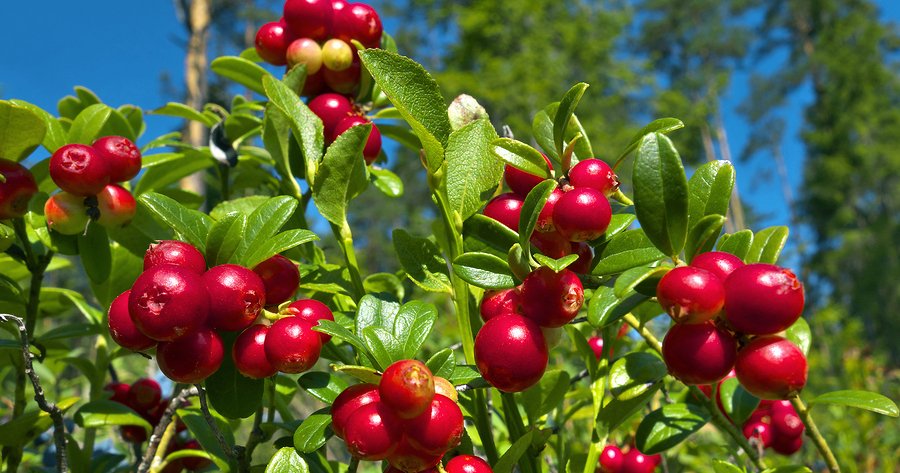
- Cranberry: (to complement D-mannose and help acidify the urine) Take 2 capsules, twice a day for one week.
- Juniper Berry: (to flush the kidneys) Take two capsules three times daily at mealtimes for one week. Increase fluid intake throughout the day.
- The herb forskolin to help flush bacteria out of the bladder.
- Also recommended are an antipathogenic formula that contain things like garlic, oil of oregano, and olive leaf extract to directly take on the infection…and a good probiotic formula to provide long term protection. (Probiotics need to be replenished whenever you have had a round of antibiotics, which leaves you vulnerable to a whole range of opportunistic infections.)
More Information on D-Mannose:
D-Mannose is a naturally occurring simple sugar, closely related (in chemical terms, a “stereoisomer”) to glucose. Small amounts of D-Mannose are metabolized by our bodies; more than small amounts are excreted promptly into the urine. But how can even large quantities of a simple natural sugar do anything at all to help maintain a healthy urinary tract?
The answer is found in the interaction between D-Mannose and the bacterium found in over 90% of all bladder infections, Escherichia coli (“E. coli”). No, not the infamous E.coli mutants associated with unsanitary food processing that has hospitalized and killed people. It’s the normal E.coli found as part of the “normal microflora” in every intestinal tract. But even normal E.coli do not belong in the bladder and urinary tract. In these areas, they multiply and become an undesirable infection.
Why doesn’t the normal downflow of urine from the kidneys through the ureters into the bladder and thence beyond simply carry the E.coli right along with it? What allows the E.coli to “stick” to the inner walls of the bladder and even work their way upward (like Spiderman) in some cases reaching as far as the kidneys?
The “cell walls” of each E.coli are covered with tiny fingerlike projections. The very tips of these projections are an amino acid-sugar complex, a “glycoprotein” also called a “lectin.” E.coli “lectins” have the unfortunate (for us) capability of “sticking” the bacteria to the inside walls of our bladders and urinary tracts, so they can’t be rinsed out by urination.
Unfortunately, for the E.coli, D-Mannose “sticks” to E.coli lectins even better than E.coli lectin “sticks” to human cells. When we take a large quantity of D-Mannose, almost all of it spills into the urine through our kidneys, literally “coating” any E.coli present so they can no longer “stick” to the inside walls of the bladder and urinary tract. The E.coli are literally rinsed away with normal urination!
An antibiotic kills unwanted micro-organisms, but it also kills many “friendly” micro-organisms. Every woman is familiar with “yeast infections” that follow antibiotic use, as the “friendly bacteria” are killed off along with the “bad bacteria”, leaving the antibiotic insensitive yeast to grow out of control. Long term or often repeated antibiotic use can lead to major disruptions in normal body microflora, and sometimes to major disruptions in health, especially immune system function. (It is suspected that “killer” E.coli of recent years are “mutants” caused by persistent antibiotic feeding to animals).
By contrast, D-Mannose does not kill bacteria, “friendly” or “unfriendly”. D-Mannose simply helps to relocate misplaced E.coli from inside of the urinary tracts to outside. (Since D-Mannose is absorbed in the upper gastrointestinal tract, it doesn’t relocate the “friendly” E.coli normally present in the colon). Use of D-Mannose is ecologically sound. The small amount of D-Mannose metabolized by the body and not excreted into the urine is harmless. As an extra bonus, D-Mannose tastes good!







I live in the UK where can I purchase D Mannose heres?
You can find d-mannose in dozens and dozens of places in the UK. A quick search on the net came of with this listing for just one brand http://www.bladder–infection.com/suppliers.htm.
Hi Jon,
Question. I have heard and read for years about the efficacy of cranberries for handling uti’s … but then I ran into conflicting data. The article:
http://waterfalldmannosereview.com/uti-bugs-love-cranberry-why
And while I would definintely include D-Mannose in any regimen for handling a UTI, I wanted to know what your take was on this view about cranberry becoming something that uti bugs can adapt to.
I’m not sure that one review, based on one person’s personal observation on their own case history, and featured on a website that sells a different product necessarily qualifies as unbiased. But then again, I sometimes write about things I formulate, and I always say nice things about them — and I’m sure I’m not biased. In any case, there are indeed studies that show that drinking real cranberry juice (not the sugar water flavored stuff) or using cranberry pills can be beneficial. They are not a cure-all one-trick-pony for UTIs, but can be a significant anicallary aid to getting rid of UTIs, along with d-mannose.
I am in California and I had
I am in California and I had Cancer of the Cervix in 1972. I had the usual Radium and Chemo…it has been some time but now I have had to have my right Kidney removed as due to scar tissue it only worked 10%….since I almost always suffer from chronic UTI be cause the urethra is blocked and I get the bacteria infections often as the urine does not empty and flows slow from the bladder…Please tell me I can stop taking all this antibiotics and find a cure so I can get back to my old self. the left kidney seems to work well …but maybe not long if I cannot stop these infections. is there a way to stop the infections and have a good urine flow again? Thanks
how do I purchase super viragon?
Super Viragon is available from http://www.baselinenutritionals.com.
Hi Jon
No matter what a person uses to kill pathogens, I suppose it would be a good idea to take probiotics, but do natural antibiotics, such as Super Viragon, kill some of the good organisms too?
Victor
The answer is sort of yes — sort of no. Some naural pathogens kill intestinal bacteria quicker. Some take more repeated use. Some have a “”preference”” for the kinds of bacteria found in the intestinal tract. Others do not. For example, colloidal silver tends to be non-specific — killing good as well as bad. Goldenseal tends to have a preference for intestinal bacteria, which is why it is so effective in killing bad intestinal bugs — but also why you don’t want to to take it on a daily basis. (I am tremendously entertained by all of the intestinal formulas that contain both probiotics and goldenseal.) Super Viragon is formulated around natural antipathogens that tend to be relative benign to intestinal bacteria. If you took a lot of it every day, you’d have a problem — but using large amounts on an as needed basis, or 3-5 droppers on a daily basis, not so much. Otherwise, if you think about it, eating garlic on a daily basis would be a problem. Then again, it is for vampires.
Thanks very much for the thought provoking and potentially useful information.
Firstly – You say that cranberry juice works through acidifying the urine. However. the article you link to says it’s not the acidity in cranberry juice but a type of tannin -proanthrocyanidins. The mechanism seems to be similar to that of D mannose – reduced adhesion to bladder wall.
Secondly – Is there any proof that high acidity kills or slows down the reproduction of the “”bad”” bacteria?
Thirdly – you did not mention colloidal silver – is this because you have evidence that it is ineffective?
thankyou
Ana
does d-mannose help with infections/urinary tract colonizations from Proteus, with constant renal gravel?
can you tell me if sex causes urinary track infections?
d-mannose has been a life
d-mannose has been a life saver for myself and my husband who had a chronic urinary infection for over a year
Hi Carmen,
You may find this
Hi Carmen,
You may find this link helpful: http://www.jonbarron.org/detox/barron-report-kidney-blood-cleansing