
What Is the Healthiest Cooking Oils by Smoke Point and Omega 3 to 6 Fatty Acid Ratios?
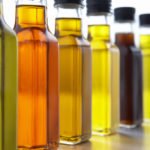
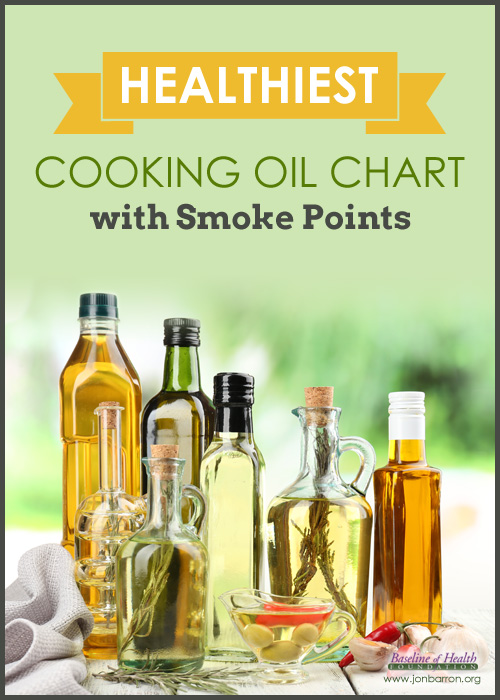 Trying to find the healthiest cooking oil can be a daunting task. One one hand, you want to cook with an oil that has a high flash (smoke) point, but you also need to use a cooking oil that has a healthy balance of Omega 3 to Omega 6 fatty acids–and even better if the oil is loaded with antioxidants and vitamins! Knowing the smoke point of oils is important because heating oil to the point where the oil begins to smoke produces toxic fumes and harmful free radicals. Check out our healthiest cooking oil comparison chart below to help alleviate the confusion!
Cooking Oil Considerations: for high-temperature cooking, select cooking oils with a high smoke point. For low-temperature cooking, or adding to dishes and salad dressings, chose oils with a higher Omega-3 fatty acids since they promote healthy cells and decrease stroke and heart attack risk. They are also known for their anti-inflammatory action. Although you need Omega-6 fatty acids to maintain cell wall integrity and provide energy for the heart, too much Omega-6 fatty acids can increase inflammation in the body. Also, cooking oils high in Omega 9 is a good way to go. Omega-9 fatty acids are considered to be “conditionally essential,” which means that although your body produces them, they aren’t produced in meaningful quantities. Consuming omega-9 fatty acids such as oleic acid lowers the risk of heart attacks, arteriosclerosis, and aids in cancer prevention.
| Cooking Oils / Fats | Smoke Point °C | Smoke Point °F | Omega-6: Omega-3 Ratio (plus other relevant fat information) |
|---|---|---|---|
| Unrefined flaxseed oil | 107°C | 225°F | 1:4 |
| Unrefined safflower oil | 107°C | 225°F | 133:1 |
| Unrefined sunflower oil | 107°C | 225°F | 40:1 |
| Unrefined corn oil | 160°C | 320°F | 83:1 |
| Unrefined high-oleic sunflower oil | 160°C | 320°F | 40:1, 84% monosaturated |
| Extra virgin olive oil | 160°C | 320°F | 73% monounsaturated, high in Omega 9 |
| Unrefined peanut oil | 160°C | 320°F | 32:1 |
| Semirefined safflower oil | 160°C | 320°F | 133:1, (75% Omega 9) |
| Unrefined soy oil | 160°C | 320°F | 8:1 (most are GMO) |
| Unrefined walnut oil | 160°C | 320°F | 5:1 |
| Hemp seed oil | 165°C | 330°F | 3:1 |
| Butter | 177°C | 350°F | 9:1, Mostly saturated & monosaturated |
| Semirefined canola oil | 177°C | 350°F | 2:1 [ (56% Omega 9), 80% Canola is GMO.] |
| Coconut oil | 177°C | 350°F | 86% healthy saturated, lauric acid (has antibacterial, antioxidant, and antiviral properties). Contains 66% medium chain triglycerides (MCTs). |
| Unrefined sesame oil | 177°C | 350°F | 138:1 |
| Semirefined soy oil | 177°C | 350°F | 8:1 |
| Vegetable shortening | 182°C | 360°F | mostly unhealthy saturated, Trans Fat |
| Lard | 182°C | 370°F | 11:1 high in saturated |
| Macadamia nut oil | 199°C | 390°F | 1:1, 80% monounsaturated, (83% Omega-9) |
| Canola oil (Expeller Pressed) | 200°C | 400°F | 2:1, 62% monounsaturated, 32% polyunsaturated |
| Refined canola oil | 204°C | 400°F | 3:1, 80% of Canola in US in GMO. |
| Semirefined walnut oil | 204°C | 400°F | 5:1 |
| High quality (low acidity) extra virgin olive oil | 207°C | 405°F | 13:1, 74% monosaturated (71.3% Omega 9) |
| Sesame oil | 210°C | 410°F | 42:1 |
| Cottonseed oil | 216°C | 420°F | 54:1 |
| Grapeseed oil | 216°C | 420°F | 676:1, (12% saturated, 17% monounsaturated) |
| Virgin olive oil | 216°C | 420°F | 13:1, 74% monosaturated (71.3% Omega 9) |
| Almond oil | 216°C | 420°F | Omega-6 only |
| Hazelnut oil | 221°C | 430°F | 75% monosaturated (no Omega 3, 78% Omega 9) |
| Peanut oil | 227°C | 440°F | 32:1 |
| Sunflower oil | 227°C | 440°F | 40:1 |
| Refined corn oil | 232°C | 450°F | 83:1 |
| Palm oil | 232°C | 450°F | 46:1, mostly saturated and monosaturated |
| Palm kernel oil | 232°C | 450°F | 82% saturated (No Omega 3) |
| Refined high-oleic sunflower oil | 232°C | 450°F | 39:1, 84% monosaturated |
| Refined peanut oil | 232°C | 450°F | 32:1 |
| Semirefined sesame oil | 232°C | 450°F | 138:1 |
| Refined soy oil | 232°C | 450°F | 8:1 (most are GMO) |
| Semirefined sunflower oil | 232°C | 450°F | 40:1 |
| Olive pomace oil | 238°C | 460°F | 74% monosaturated, high in Omega 9 |
| Extra light olive oil
Ghee (Clarified Butter) |
242°C
252°C |
468°F
485°F |
74% monosaturated, high in Omega 9
0:0, 62% saturated fat |
| Rice Bran Oil | 254°C | 490°F | 21:1, Good source of vitamin E & antioxidants |
| Refined Safflower oil | 266°C | 510°F | 133:1 (74% Omega 9) |
| Avocado oil | 271°C | 520°F | 12:1, 70% monosaturated, (68% Omega-9 fatty acids) High in vitamin E. |
Jon Barron’s Final Recommendation For Healthiest Cooking Oils:
The bottom line is that when possible, buy and use organic, unrefined, cold-processed vegetable oils. Use extra virgin olive oil in salads or to add to cooked foods, but not for high temperature cooking. Unrefined walnut oil is also good, but again only for low temperature uses.
You can use virgin coconut oil (high in beneficial saturated fats and medium chain triglycerides) for most mid-temperature cooking. However, coconut oil has a smoke point of about 350 degrees F (171 C), which means it is not suitable for high temperature cooking. Other choices include virgin olive oil and even butter in small amounts.
Use avocado oil for high temperature cooking. Avocado oil has a very high smoke point by comparison to other cooking oils. It will not burn or smoke until it reaches 520 F (271 C), which is ideal for searing meats and frying in a Wok. Another good cooking oil is rice bran oil 495 F(257 C). Again, look for organic, cold-processed oil.
Additional Articles on Cooking Oils:



This article is the best, I
This article is the best, I have spent so muuch time investigating and trying to figure out cooking oils and you broke it down quite simply. Thank You!
I know deep frying isn’t the
I know deep frying isn’t the greatest, but if I had to pick a top 3 list of the best oils to use for occasional deep-frying… what would you folks suggest I look for?
Check out Jon’s last
Check out Jon’s last paragraph: “Use avocado oil for high temperature cooking. Avocado oil has a very high smoke point by comparison to other cooking oils. It will not burn or smoke until it reaches 520 F (271 C), which is ideal for searing meats and frying in a Wok. Another good cooking oil is rice bran oil 495 F(257 C). Again, look for organic, cold-processed oil.”
Written by Jennifer Good.
Written by Jennifer Good.
I wouldn’t use high PUFA oils
I wouldn’t use high PUFA oils for high temperature fry, they produce toxic fumes (even within smoke point). Probably coconut or butter are good options.
Wondering what you think
Wondering what you think about avocado oil in the sense that it is most of the time refined (which allows the temp to be higher). Do you recommend only unrefined or is refined okay? (as you recommend not using refined…but as I am researching I’m finding that some oils have a higher smoke point only if refined.
If a raw oil, like coconut or avocado can already handle up to 210F (the heat of steam), then you would think its okay to refine it this way?
Once you understand what’s
Once you understand what’s involved in the standard commercial refining process, you really won’t want to consume any refined oils on a regular basis. https://jonbarron.org/article/refined-death. That said, avocado oil is a little different. In its unrefined state, it has a smoke point of about 400 degrees, which is suitable for most cooking purposes. But you can also find expeller pressed, naturally refined avocado oils that don’t use any chemicals, solvents, or lye and that have a smoke point of about 500 degrees.
I have been looking for
I have been looking for information on okra oil. The seed is up to %40 oil, but I can’t find much info on it (fatty acids, smoke point). Okra is so easy to grow. Would you have any info on this under used oil?
Thank you Jon for the most
Thank you Jon for the most complete list
of cooking oils I have seen. Very helpful.
Best regards
Toone Elzink
What are your thoughts on
What are your thoughts on palm fruit oil? Besides being great for high heat cooking- it is also rich in vitamin A, beta-carotene, and vitamin E- tocotrienols. Also has a better shelf life than a lot of other oils.
I just read it a few days
I just read it a few days back, here in Canada, they are pulling out some pre packaged foods because they contain palm oil. So you have to do some more research
I think you’re referring to
I think you’re referring to Palm Kernel oil… which is bad. Red Palm oil though (which I believe the previous commenter meant with palm fruit) is one of the healthiest oils out there… and is not listed on this site. Just thought I would clarify that.
Thanks for this list! Good
Thanks for this list! Good information here. I am just getting to know Camelina Oil, grown by Three Farmers, SK. The oil is non-GMO, cold-pressed, contains Omegas 3 and 6, Vit E. Smoke point: 475.
Greetings,
Sonja
What is important to mention
What is important to mention is that both omega-6 and omega-3 compete for the same metabolic enzyme in the body. Maintaining a ratio of these two is ismportant for maintaining a healthy cardiovascular health. Amounts of omega-6 injected has clinically been proven to be insignificant because almost all junk food contain omega-6 anyway–we are getting too much omega-6. As a result, omega-6 is a factor in affecting our metabolic and inflammatory state. Omega-3 has greater factors of health benefits then omega-6. Some authors suggest a ratio or omega6:omega3 from 1:1 to 4:1. Some even suggest 4:1. Typical Western diet would contain 10:1 to 30:1. Source: google
This list makes no sense.
This list makes no sense. Several oils are listed multiple times. Safflower oil, for example, is listed as unrefined safflower oil, refined safflower oil and just safflower oil. What is just ‘safflower oil’?
There are different ways of
There are different ways of processing oil; these differences are very important to understanding how they impact your health. I suggest the following articles for a better understanding:
http://www.jonbarron.org/article/fats-and-oils-made-simple
http://www.jonbarron.org/article/refined-death
Perhaps it doesn’t make any
Perhaps it doesn’t make any sense if you can’t be bothered to look beyond the end of your own nose.
If you don’t know the difference, and are willing to be something more ambitious than be spoon-fed, perhaps you could try using a dictionary or that newfangled interweb thingy to check for yourself the difference among the oils that were the basis of your question!
I think Peter asked the
I think Peter asked the question here because he values our opinions and expertise. Unfortunately your opinion was of him, not the oil, and not helpful.
No, Peter obviously does not
No, Peter obviously does not value your opinions/expertise or your smart decision to list the same-source oil processed in different ways. The responder was defending you, so perhaps best not to criticize “A commenter” for that? This is a very useful comprehensive chart, thank you.
which oil is better in
which oil is better in respect of smoke pont ?(high or low)
There is a brief explanation
There is a brief explanation at the top of the page. For more information, here is a great article all about fats and oils: http://www.jonbarron.org/article/fats-and-oils-made-simple
Thankyou so much Jon. I have
Thank you so much Jon. I have done a lot of research on cooking with oils and your information seems to be the most accurate and very well explained.
Thank you Julie!
Thank you Julie!
Are smoke points also
Are smoke points also relevant in baking – for example, baking a cake made with olive oil and baked at 350 F – or is this strictly of concern when cooking on a stovetop (frying/sautéeing)???
Hi Norma,
Hi Norma,
Yes, the smoke point of an oil or fat is the temperature at which it begins to break down to glycerol and free fatty acids, and produce bluish smoke. The glycerol is then further broken down to acrolein which is a component of the smoke. The smoke point also marks the beginning of both flavor and nutritional degradation.
The oil doesn’t know where
The oil doesn’t know where the heat comes from – it doesn’t matter.
Rice Bran Oil in your chart
Rice Bran Oil in your chart is 490(254) not 495(257).
Great list of oils, thanks.
Great list of oils, thanks. Will be useful for all the Chinese and Asian wok cooking I do.
Thanks,
I would very much appreciate
I would very much appreciate having the oil chart in a form, ie Pdf that I could download/save for reference. I tried saving it different ways and did not succeed.
Is that possible ?
Good idea, we will have to
Good idea, we will have to work on that. Can you print it for now?
the chart can be copied and
the chart can be copied and pasted and printed off on word
On a mac at least, if you
On a mac at least, if you press cmd + p whilst on the page that contains the table it takes you to the print screen. at the bottom it should say ‘open pdf in preview’ click this and then save as through preview…
If you don’t have a mac I’m sure there is a similar procedure you can do for PC’s
Good luck
some of my friends say that
some of my friends say that sesame oil while cooking if bubbles comes only pure sesame oil, otherwise it is mixed with other oils. Is it true.
Please revise the information
Please revise the information/specs listed. Macadamia oil is way off… In contrary to what you listed, it contains a minimal of amount of Omega 9 and has mostly Omegas 3,6,7.
Wrong information has bad consequences…. so… Please…
Hi Alexander,
Hi Alexander,
Actually, the chart is correct. Macadamia oil contains approximately 60% oleic acid, 19% palmitoleic acid, 1-3% linoleic acid and 1-2% α-linolenic acid. Oleic acid is one of the two types of Omega 9 fatty acids, which is a main component of olive oil, macadamia oil, and other monounsaturated fats.
If you find a resource that says otherwise, please send us that information. Thanks!
How do I get the temperature
How do I get the temperature while cooking ?
For example what is the normal temperature while frying Indian dishes like SAMOSA & the like ?
Thanks
If you are frying, you are
If you are frying, you are going to be at the highest heat possible. Frying temperatures are usually 375 degrees F (190 degrees C) or higher.
I see no omega3 to omega6
I see no omega3 to omega6 ratio for the coconut oil.
Could you please provide the same
Thx
Coconut oil does not provide
Coconut oil does not provide a balance of essential fatty acids because it does not deliver omega-3. Unlike most vegetable oils, coconut oil is high in saturated fat. One cup of coconut oil has 218 g of total fat, with 87 percent of the fat content consisting of saturated fat. It also has 3.92 g of omega-6 fatty acids, but they only represent 1.8 percent of the total fat in coconut oil.
Cook with Omega 3 and Omega 6
Cook with Omega 3 and Omega 6 rich oils, where do you get this crazy information?
As soon as these oils are heated the health benefits of the Omega 3 and ^ are denatured, producing potentially harmful byproducts. You are better off cooking in lard, which is not
I for sure will not be following the advice presented here
Where did you see this
Where did you see this information on this page? We say the exact opposite. Perhaps you should read the article again about what oils we recommend for cooking and ones for salads, etc.
Virgin coconut oil is one of
Virgin coconut oil is one of the healthiest oils to cook in, and not just because of its high smoke point. It is nature’s richest source of medium-chain fats – that break down in our bodies to produce energy, are not stored as fat, and boost immunity and metabolism.
You did not mention Mustard
You did not mention Mustard Oil. It is widely used in Indian subcontinent for cooking. How good or bad is it for cooking?
Thanks for pointing that out.
Thanks for pointing that out. It does look like mustard oil has a high smoke point at 489°F. Mustard oil has about 60% monounsaturated fatty acids (42% erucic acid and 12% oleic acid); it has about 21% polyunsaturated fats (6% the omega-3 alpha-linolenic acid and 15% the omega-6 linoleic acid), and it has about 12% saturated fats.
Refined peanut oil rated as 2
Refined peanut oil rated as 2:1 is not accurate.
Unrefined is 38:1 omega 3
Thanks, we updated the chart.
Thanks, we updated the chart. Thanks for letting us know!
I cook pancakes on a cast
I cook pancakes on a cast iron skillet on my stove….I usually use butter to cook them in, but it certainly gets smoky! I’m not sure what temp the skillet actually heats up to….what oil would you recommend I use instead of butter…I guess I could just go with avocado to be on the safe side…I don’t want the pancakes to taste too weird!
Howzitt and thanks for your
Howzitt and thanks for your work. Correction on Safflower Oil : (70-79%) Linoleic Acid (Omega 6) smoke point 107°C- 225°F . Also, I agree with ” Byaba on August 22, 2014 – 6:58pm…” Heating flaxseed oil (high in linolenic/omega 3) should not be recommended due to it’s extreme heat sensitivity/volitility & toxicity potential.
I am unable to pin (Pinterest
I am unable to pin (Pinterest) this excellent information because the image associated with it (your logo) is too small. Now I know why there aren’t more pins for this great info. Are you able to add a larger image to the page?
Try again, we just added an
Try again, we just added an image! Thanks for letting us know.
Thanks so much for this. It’s
Thanks so much for this. It’s so enlightening. Jon, you do so much work and I say, God bless you real good. However, I’d like you throw in some more light here concerning palm oil. Over here in Nigeria, that is one oil common in these parts. A good number of the vegetable oils are rather suspect. I had expected your response to an earlier post by someone on palm oil but you probably didn’t notice it. So, what’s your take on palm oil? I ask because it is my preferred oil for frying.
You should check out Jon’s
You should check out Jon’s detailed explanation of fats and oils here: http://www.jonbarron.org/article/fats-and-oils-made-simple
On this page, he adds, “Coconut oil has a great many health benefits, but it is not good for high temperature cooking. It’s smoke point is about 350 degrees F (177 C). Palm oil is very different from coconut oil in composition. Palm oil is 40% saturated and 60% unsaturated. The saturated portion of coconut oil is largely lauric acid, which is very healthy. The saturated portion of palm oil is palmatic acid, which tends to push up triglyceride levels – not so healthy. On the positive side, though, the unsaturated portion of palm oil is a monounsaturated oil, just like olive oil. But unlike olive oil, palm oil’s natural resistance to oxidation makes it a healthier and safer oil for cooking or deep-frying. The smoke point for palm oil is a much higher 455 degrees F (235 C). Then again, the smoke point for avocado oil is 520 degrees F (271 C). And rice bran oil, which is less expensive, has a smoke point of 490 F (254 C).”
Again, I think a
Again, I think a clarification of how good these oils are relative to heating points will be in order Jon. For example,concerning the Mustard Oil, is it good, or bad for deep frying? If I want to fry like plantain or meat, is it okay to do so with palm oil? Is it better with mustard oil or canola? Or even coconut oil? It’s simpler to understand it that way. Thanks.
This is just a simple chart,
This is just a simple chart, you need to read Jon’s articles to get more details, such as the one mentioned above: http://www.jonbarron.org/article/fats-and-oils-made-simple
You forgot the Margarine and
You forgot the Margarine and deep-fryer shortening. But everything else is good.
These hydrogenated fats
These hydrogenated fats should never be used, if you care about your health, at any temperature.
Thank you for creating this
Thank you for creating this list, I am now a lot more informed and will be more confident in choosing which oils to use.
What is the difference
What is the difference between monounsaturated and monosaturated?
Thx
You may find this helpful:
You may find this helpful: http://www.jonbarron.org/article/fats-and-oils-made-simple
Is it healthy to drink
Is it healthy to drink coconut oil?
Thank you so much for your
Thank you so much for your informative article- it really helps!!!
Thanks for a very useful,
Thanks for a very useful, quick-reference table! And the links to other more detailed articles.
Very useful. Thank you !
Very useful. Thank you !
I see that you have 3 levels
I see that you have 3 levels of SOY oil: unrefined, semi-refined, & refined all with different smoke points which makes sense.
Then at the bottom of the table you have SOYBEAN oil with an even higher smoke point.
Can you clarify the difference? This seems quite confusing as I would think SOY oil is the same as SOYBEAN oil but maybe I am wrong here. I look forward to hearing back from someone!
This was fixed, thanks for
This was fixed, thanks for asking!
Hello & thanks for really
Hello & thanks for really useful info.
You have butter listed but not clarified butter (also known as ghee). I believe ot has a higher smoke point than butter. I wondered whether it’s omegas are somilar to butter’s – or whether the removal of milk fats in the clarification process alters this?
Regards.
Yes, you are correct.
Yes, you are correct. Clarified butter has a higher smoke point (485 °F or 252 °C) than regular butter (325-375 °F or 163-190 °C). Omega-6 to omega-3 ratio: 1.6:1. Saturated fatty acids: 62.2%
Hi,
Hi,
I read that “In order to be legally labeled “extra virgin”, the free fatty acid content of an olive oil must be 0.8% or less.” The table on this page lists smoke points for 1) Extra virgin olive oil and 2) High quality (low acidity) extra virgin olive oil. If all EVOO is low acid, what is the difference between these two types of oil and how can I tell from the bottle which type it is?
All the best,
David.
Low acidity is important in
Low acidity is important in extra virgin olive oil because the lower the percentage of oleic acid, the higher the quality of the olive oil. The term oleic means related to, or derived from, oil or olive. Oleic acid is a naturally-occurring mono-unsaturated omega-9 fatty acid found in various animal and vegetable sources. The degree of acidity referred to in extra virgin olive oil refers to the proportion of free fatty acids, not to the taste. Virgin olive oil has about 3.0% acid. Extra virgin olive oil has about 0.8% acid. But to be truly great extra virgin olive oil, it must be virtually free of acidity, running less than 0.25%. The higher the content of acidity the more unpleasant is the flavor of the oil. Different factors are responsible for the level of acidity in the production of olive oil, but quality of the soil is of utmost importance. Good harvesting and pressing practices are also important. Olives should not be harvested from the trees and not picked off the ground. Pressing equipment should be kept clean and olives should be processed shortly after picking in order assure low acidity and better overall quality. Incidentally, purchasing your olive oil from a trusted merchant is the best way to ensure that you get high quality extra virgin olive oil!
I make and use a lot of ghee.
I make and use a lot of ghee.
What is the smoke point, and what, if any, are the benefits?
I fine the flavour difference between oil and ghee remarkable.
We added ghee to the list,
We added ghee to the list, thanks for the note. I would google ghee to see some of the health benefits since there are some studies about it.
Thank you for this
Thank you for this compilation.
can anyone enlighten me on any of these ponderings?..
1) is it not relevant to give information on the quantity of fatty acids contained in the oils as well as the ratios?
2) where do the other fatty acids come in to it? (3, 7 ect)
3) Is the fatty acid ratio of coconut oil irrelevant due to the small amount it contains?
4) how come you haven’t added camelina or mustard oil to the list?
5) if it has a ratio of 0:0, which is better than any other high flash point oil, why isn’t ghee a suggested cooking / frying product?
Some of your questions can be
Some of your questions can be answered by looking at the links at the bottom or the article for further reading. Don’t miss the first link!
There are three types of
There are three types of peanut oils (“unrefined peanut oil”, “peanut oil” and “refined peanut oil”). What are the differences between the first two types in terms of processing methods?
This is actually really
This is actually really important to understand. Read this: https://jonbarron.org/article/refined-death
What?!
What?!
I just need to know the smoke point of regular Canola!
All the bottle says is “Canola from Canada.” And that is the only ingredient it lists. But what kind of Canola is it? It’s Publix brand, BTW. Just need to know smoke point!
Thx.
This could be a hugely useful
This could be a hugely useful article. But without referencing the sources of the information, it is rendered worthless. Please can you provide references?!
Thank you 🙂
Most of this information is
Most of this information is readily available online by simply doing a search on the oil you are interested in. What we did was condense a lot of research into a single graph for usability for our readers. What specific question do you have?
Cooking oil is not an easy
Cooking oil is not an easy task, especially when you want to make the healthy oil. But, your post truly gets our wonders removed. Thanks for sharing!